


Last fall I drove three and a half hours west from New York to visit a friend’s property in the middle of nowhere, Pennsylvania (Washington County, to be exact). If you haven’t been to Washington County, picture: rolling hills, no cell service, a Dollar General every 11 miles, and the kind of quiet that makes you realize how loud your life actually is.
My friend bought 60 wooded acres out there for $150,000. One-five-zero. For that he got a three-bedroom house, a barn, a stocked trout stream, and more land than he can see from any single point on the grounds. His monthly cost to maintain the property? About $100. The taxes are almost a rounding error.
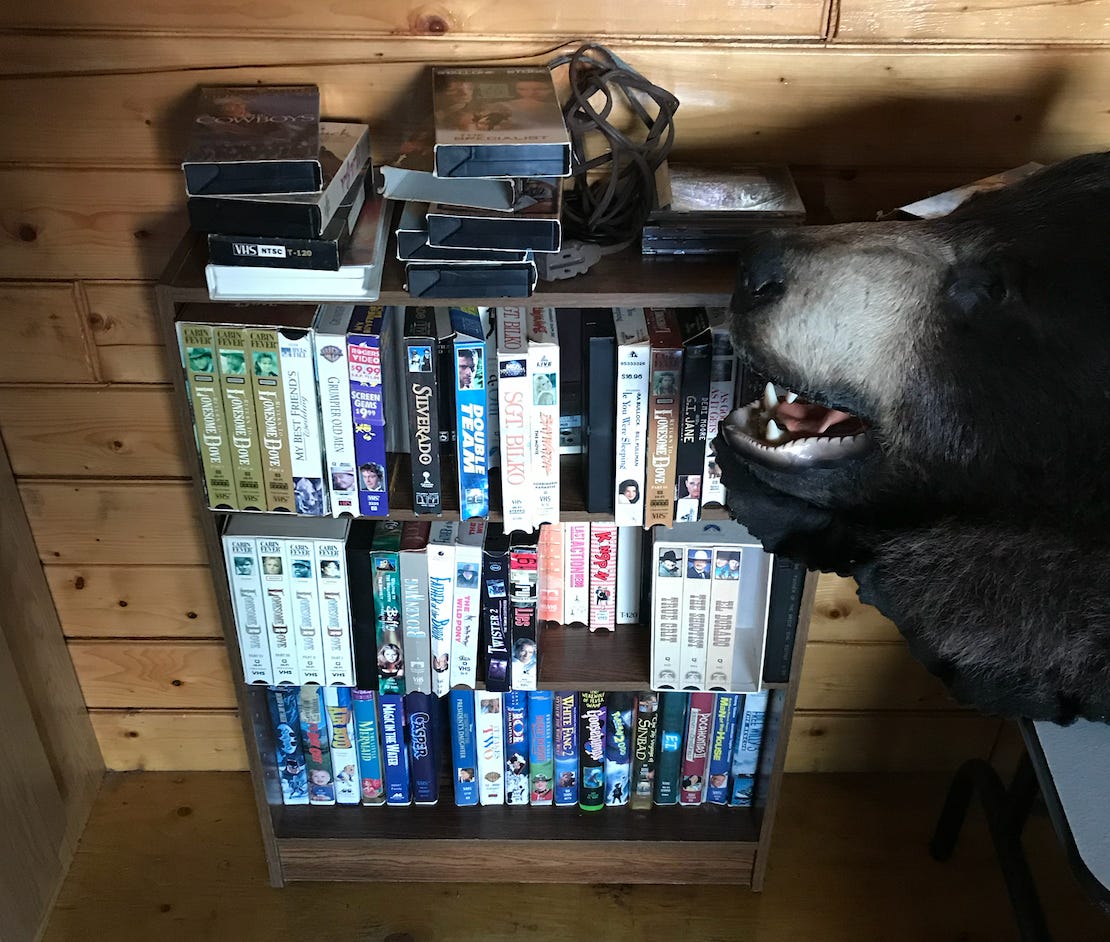
That weekend we rode ATVs, fished the stream, shot guns off the back porch, rebuilt a woodshop in the barn, cleared some trails, drank a lot of Natty Light by a fire, and watched Batman (the Michael Keaton one) on VHS in the living room. It was, without exaggeration, the best weekend of my year.
And somewhere between the trout stream and the sixth Natty Light, a thought formed that I hadn’t been able to shake since: I want to be a prepper.
I realize “prepper” conjures a certain image—bunkers, canned beans, a guy with a manifesto and too many guns. But I’m starting to see the appeal of owning a large piece of land far away from everything. The tinfoil hat crowd might be early, but early isn’t the same as wrong.
Let me explain.
The AI revolution is not coming. It’s here.
And the second-order effects are going to reshape the physical world in ways most people aren’t pricing in.
The K-shaped economy is already accelerating. The top decile is accumulating wealth at a pace we haven’t seen since the Gilded Age, while the middle class is getting hollowed out by automation and AI-driven productivity gains. McKinsey estimates that up to 30% of U.S. working hours could be automated by 2030. Goldman Sachs puts the number of global jobs at risk at 300 million. These aren’t fringe predictions—they’re coming from the same banks underwriting your deals.
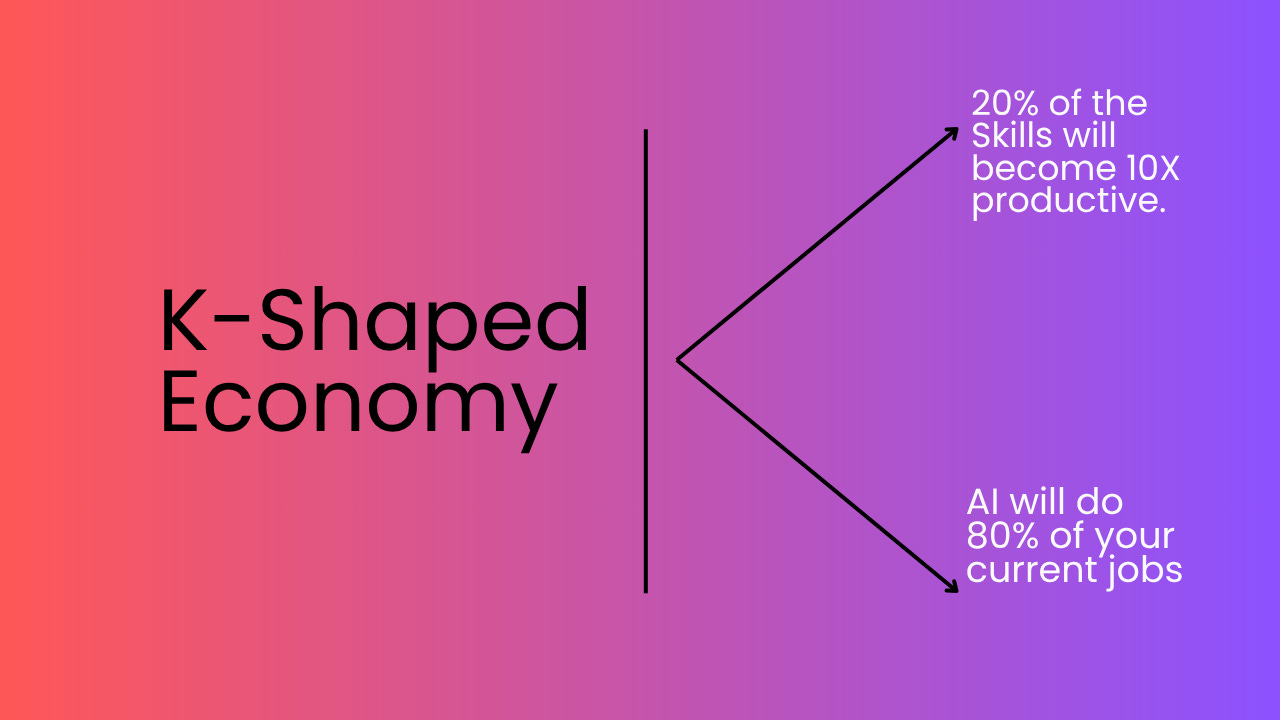
What happens when a meaningful percentage of the workforce is displaced in a compressed timeframe? History offers some clues, and none of them are reassuring: social unrest, political instability, and density becoming a liability rather than an asset.
Add to that the rise of humanoid robotics—Tesla’s Optimus, Figure AI, Boston Dynamics—and you start to see a future where cities look and feel fundamentally different: more automated,ess human, and less livable in the ways that matter.
Now ask yourself: where do you want to be?
The ultra-wealthy are already answering that question. And the answer, increasingly, is land.
The land market in the United States is one of the most interesting and misunderstood asset classes in real estate. Here’s what most people don’t realize:
Supply is fixed and shrinking. The U.S. has roughly 1.9 billion acres of land, but only about 40% of that is privately held. The rest is federal, state, or tribal. And the amount of privately held rural land entering the market each year has been declining for decades as institutional holders, timber companies, and conservation trusts absorb the supply.
Meanwhile, the USDA reports that roughly 11 million acres of farmland and ranchland changed hands annually over the past five years—but the buyer pool is shifting dramatically toward institutional capital and ultra-high-net-worth individuals.
Demand is spiking from a new buyer class. The “retreat property” market—rural land purchased for recreational, prepper, or lifestyle purposes—has exploded since 2020. The Land Report, which tracks large-acreage transactions, has documented a surge in family office and HNWI land acquisitions (particularly in the Mountain West, Appalachian corridor, and rural South):
John Malone is the largest private landowner in the US with over 2.2 million acres
Ted Turner holds roughly 2 million
Jeff Bezos owns over 400,000 acres
Meanwhile, Bill Gates is the largest private farmland owner at roughly 270,000 acres.
The tax benefits are extraordinary.
Land ownership unlocks some of the most powerful tax strategies in the real estate playbook.
Conservation easements allow landowners to permanently restrict development on their property in exchange for a tax deduction often valued at 40–60% of the land’s fair market value.
Agricultural exemptions can reduce property tax assessments by 80–90% if you run even a modest farming or timber operation.
1031 exchanges allow tax-deferred rollovers from other real estate holdings.
Opportunity Zone designations, where applicable, offer capital gains deferral and potential elimination.
Timberland, in particular, offers a unique advantage: timber revenue is taxed at long-term capital gains rates rather than ordinary income, and the cost of the timber itself can be depreciated over the cutting cycle.
For a family office looking to park capital in a hard asset with a favorable tax wrapper, rural land is arguably the single best vehicle available.
Now the fun part: what a modern doomsday property actually looks like.
Forget the Cold War bunker aesthetic. The “luxury prepper market” has evolved into something that looks more like a five-star resort buried underground.
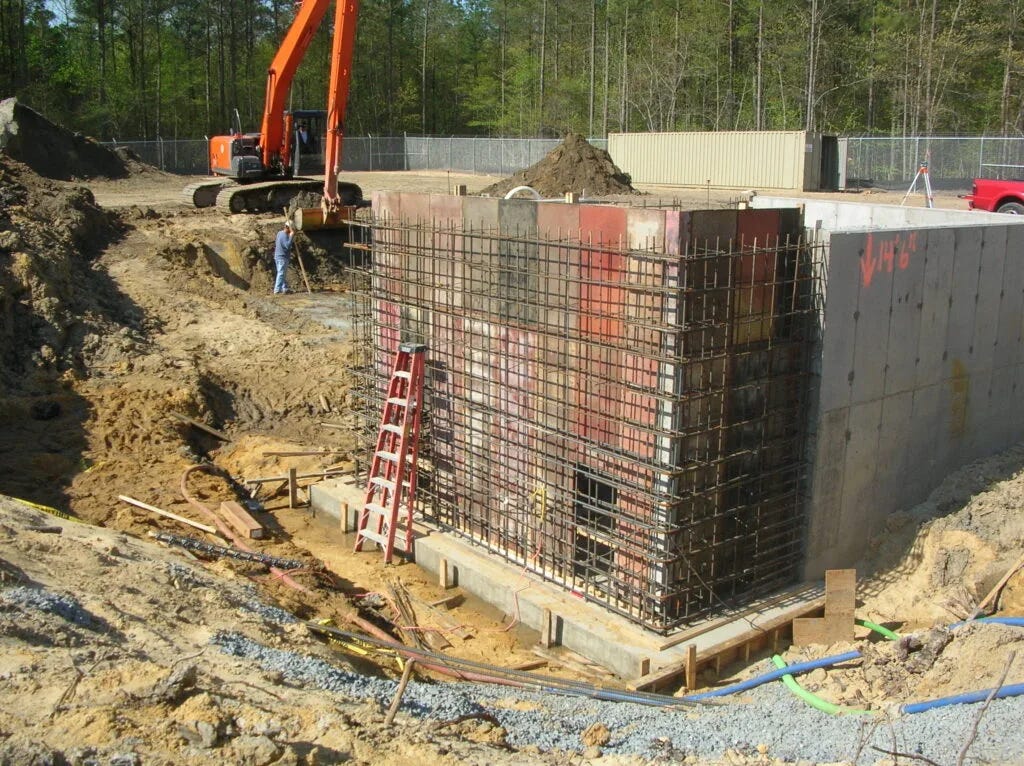
Hardened Structures, a Virginia-based firm, builds custom subterranean residences for clients spending $1 million to $10 million+ on their shelters. Vivos xPoint in South Dakota has converted 575 former Army munitions bunkers into the world’s largest private survival community.
A high-end doomsday compound in 2026 typically includes:
A fortified primary residence—often earth-sheltered or partially underground—with blast-rated doors and ballistic-grade walls
Below that, a bunker rated to withstand nuclear, biological, and chemical threats, with independent HVAC and NBC air filtration
Power from a hybrid system—solar array, wind turbines, and a buried diesel or propane generator with 12+ months of fuel storage
Water sourced from a private well with UV purification, reverse osmosis filtration, and a rainwater collection cistern
Food production handled through a combination of hydroponic grow rooms, greenhouse structures, root cellars, and long-term freeze-dried storage rated for 25 years
Communications run on Starlink for internet, with ham radio and satellite phone as backups
Above ground, the best compounds include arable land for farming, timber for building and fuel, a freshwater source (stream, spring, or pond), and enough acreage to create a defensible perimeter—typically 50+ acres minimum.
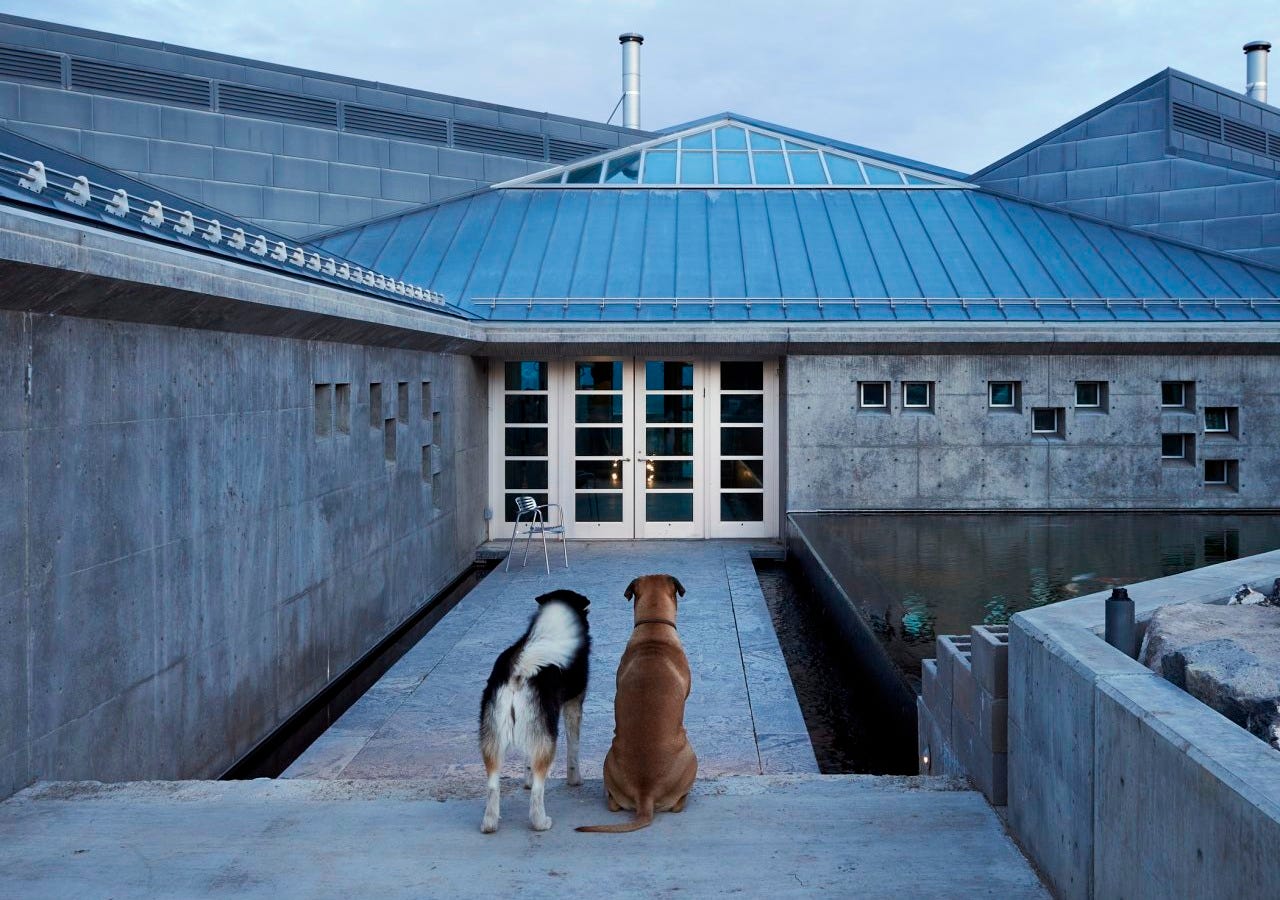
These properties include shooting ranges, hunting grounds, off-grid workshops, and ATV trail systems. And if you really want to spend some money, you can add medical suites with telemedicine capability, safe rooms with biometric access, faraday cages to protect electronics from EMP, etc.
The total cost? For a turnkey doomsday compound on 50–100 acres in a favorable state—Wyoming, Montana, West Virginia, rural Pennsylvania, the Ozarks—you’re looking at $2 million to $15 million all-in, depending on spec.
That’s a rounding error for the family office crowd.
And unlike a penthouse in Miami or a house in the Hamptons, it’s an asset that appreciates in value precisely when everything else doesn’t.
So who’s building a doomsday real estate investment platform for luxury preppers?