

Tax credit investing scares many real estate investors. And rightfully so: programs like Low-Income Housing Tax Credits (LIHTC) and New Market Tax Credits involve competitive allocation processes, layers of regulatory compliance, and deal structures that can take years to close.
But as a private investor, I’ve fallen in love with historic tax credits. The program is non-competitive. The universe of eligible buildings — about 95,000 on the National Register of Historic Places — is large enough to offer a steady pipeline of opportunities but fragmented enough that institutional capital ignores it entirely.
I’ve invested in several HTC deals as an LP over the past few years, and the category has become one of my favorite corners of real estate precisely because the checks are small, the buildings are old, and every deal is completely different from the last.
How the Math Works
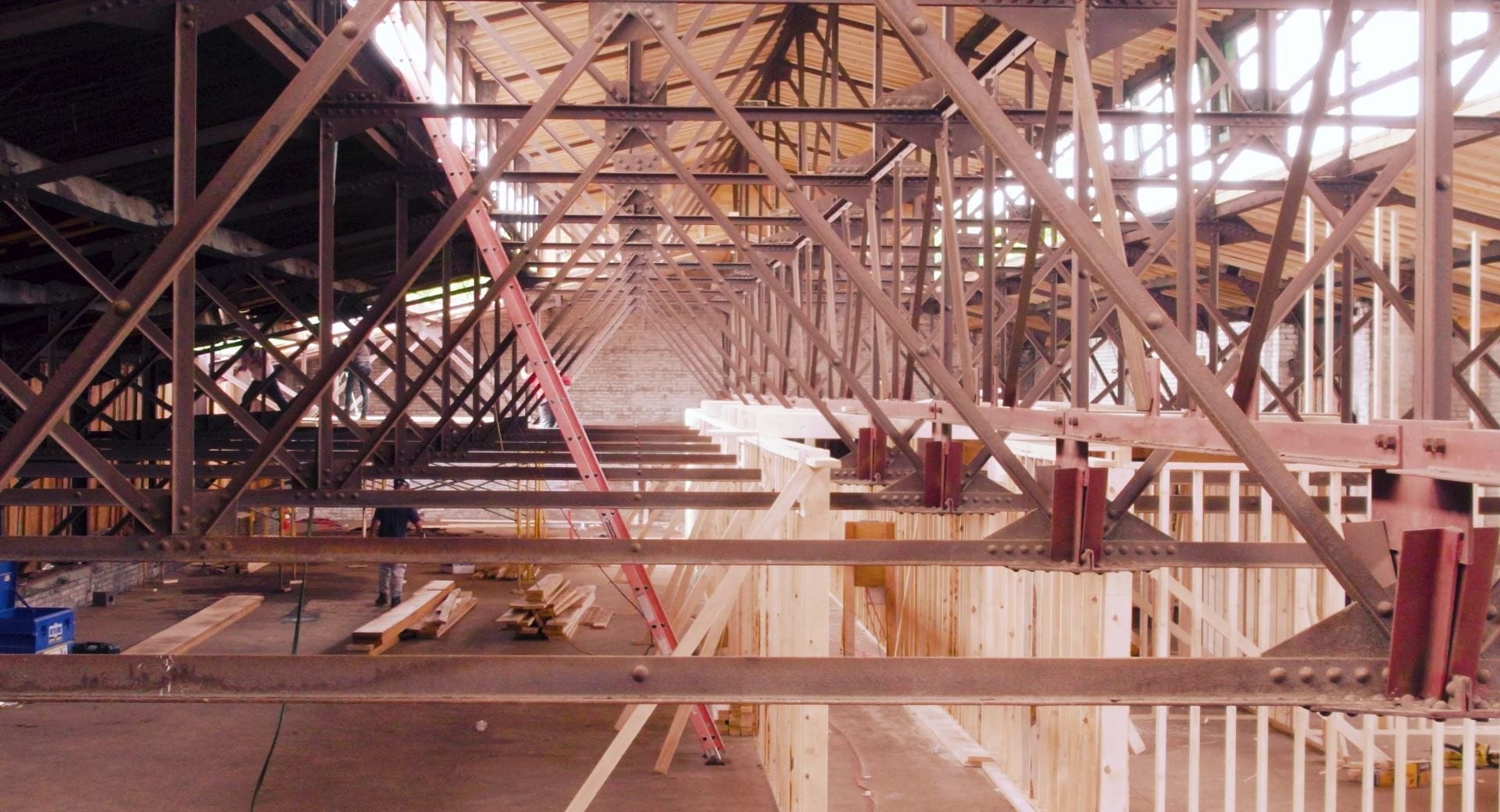
To see how HTCs work in practice, consider The Foundry in Newburgh, New York, a small city about 90 minutes north of Manhattan. Developer Jake Chai and his partners at Mana Tree Properties acquired the 160,000-square-foot former factory complex out of bankruptcy in 2020. The building is where early ice machines and cold storage equipment were manufactured starting in the 1880s, and it had cycled through several failed residential conversion attempts before Chai’s group picked it up and converted it into 59 residential units.
Chai wrote a detailed case study of The Foundry for Thesis Driven that’s worth reading in full, but the key takeaway is that the deal simply wouldn’t have worked without historic tax credits.

That’s a common story. Rehabilitating a historic building is almost always more expensive than building new — in a market like the Hudson Valley, ground-up Type III construction might run $125–175 per square foot, while a historic rehab can cost $200–300+ per square foot once you account for century-old structural systems, code compliance challenges, and the requirement to preserve the building’s historic character. Without a subsidy, most of these projects simply don’t pencil.
The federal HTC covers 20% of Qualified Rehabilitation Expenditures (QREs), which include most hard and soft costs tied to the renovation — construction, architectural and engineering fees, construction period interest — but exclude land acquisition and new construction. Many states layer on additional credits. New York, for instance, offers a 20% state credit, bumped to 30% for projects under $2.5 million in QREs. Stack a 20% federal credit with a 20–30% state credit, and you’re looking at credits covering 40–50% of a project’s rehab costs.
Here’s what the math looks like on a typical deal:
Total project costs (excluding land): $28 million
Qualified Rehabilitation Expenditures: ~90% of project costs, or about $25 million
Federal credit (20%): $5 million
State credit (20%): $5 million
Total credits generated: $10 million
The developer then sells those credits to a tax credit investor — typically a large bank or insurance company looking to offset its own tax liability. Credits sell at a discount, and after structuring and financing costs the developer typically loses about a third of the face value. But the net result is still roughly $6.5 million in effectively free equity injected into the capital stack.
That changes everything about the deal:
Without HTCs: a construction lender might finance 70% of project costs, leaving roughly $8.4 million in equity needed. On a deal that stabilizes at a modest spread over basis, you might see a levered IRR in the low-to-mid teens — if the deal pencils at all given rehab costs.
With HTCs: that $6.5 million in credit equity covers most of the gap, reducing the true out-of-pocket equity to under $2 million. The same stabilized asset now throws off levered IRRs in the mid-20s or higher, with a multiple on invested capital that’s dramatically improved.
For a developer, HTCs can turn a project that flat-out doesn’t work into one with compelling risk-adjusted returns. For a passive investor alongside that developer, it means getting into a deal at a meaningfully lower basis than the building’s stabilized value.
Why Institutions Can’t Compete Here
The structural barriers to institutional HTC investing aren’t going away, and they’re worth understanding because they’re the source of the private investor’s advantage.
Every deal is bespoke: there’s no standardized product. Each building has its own history, its own NPS approval requirements, and its own construction surprises: a penthouse floor with trusses poured at the wrong clearance height, a roof that needs full replacement with historically appropriate materials, or a facade restoration that requires sourcing discontinued brick. You can’t model these variables on a spreadsheet and deploy capital programmatically.
The deal sizes compound the problem. Nearly half of all HTC projects in 2021 were under $1 million in total cost, and 18% were under $250,000. A fund manager writing $50–100 million checks has no mechanism to participate in a $3 million rehab of a 19th-century factory, and the diligence overhead doesn’t justify trying. Thirty percent of certified projects in 2021 were in communities fewer than 50,000 people. These are the kind of markets that institutional capital has never figured out how to reach efficiently.
The pipeline is also finite and fragmented. Of the roughly 95,000 buildings on the National Register, about 47,000 have already been developed using HTCs. The remaining 48,000 are scattered across the country, and the most accessible and viable projects were developed earliest. Finding the next good deal requires local knowledge, relationships with municipal governments, and patience — none of which scale.
All of this means the competitive set for any given HTC deal is remarkably small. You’re not bidding against Blackstone or competing with a REIT. You’re working with a local developer who has done two or three of these deals and knows exactly which buildings in their market are viable candidates. For a private investor, that lack of competition is the whole game.
How to Actually Invest in HTC Deals
For passive investors interested in the category, the path starts with finding the right operators.
HTC deals live and die on the team. You want a developer who has completed at least one HTC project, has established relationships with tax credit investors and bridge lenders, and knows their local market’s historic building stock inside and out. Many of the best HTC developers are based in secondary and tertiary markets — places like Newburgh, NY, or small cities across the Hudson Valley, the Rust Belt, and the Southeast where historic buildings are plentiful and acquisition costs remain low.
The credit structure is the next thing to understand. The key question on any HTC deal is whether the developer plans to retain the credits directly or sell them to a tax credit investor. Larger projects generating over $5 million in credits typically sell to institutional buyers — big banks like U.S. Bank that have dedicated teams purchasing credits at a discount to offset their own tax bills. Smaller projects often have the developer retain credits, which is simpler and more cost-efficient but requires the developer to carry sufficient tax liability to use them.
It’s also important to understand how the capital stack works in practice. Tax credit proceeds don’t flow until the building is placed in service and the National Park Service signs off on its Part 3 inspection, which means developers need bridge financing to access the credit value during construction. That bridge loan gets repaid once the building receives its certificate of occupancy and the credits are formally earned. Make sure the capital stack accounts for this timing gap, and that the bridge lender has real HTC experience.
Finally, the best HTC developers know how to layer credits with other incentive programs — LIHTC, Brownfield credits, New Market Tax Credits, PILOTs, and TIF financing — to further reduce the equity basis and improve returns. Stacking programs adds complexity, but it can also make marginal deals highly attractive.
The Investor’s Edge
What I find most compelling about HTC deals as an investment category is that the returns are driven by a structural inefficiency rather than a market bet. You’re not underwriting rent growth or cap rate compression. You’re benefiting from a federal program that effectively subsidizes your equity basis, combined with a competitive landscape that keeps institutional capital on the sidelines.
The underlying assets — historic buildings in communities that need investment — also come with a built-in story that tenants and local governments want to support. These deals often carry goodwill, tax abatements, and community backing that conventional developments simply don’t get.
There are real risks, of course. Construction on old buildings always produces surprises, and the NPS compliance process adds time and complexity to every project. The five-year recapture period means you can’t sell more than a third of your ownership without triggering a clawback of credits, so these are long-duration, illiquid investments that require genuine trust in your operating partner.
But the feature that matters most to me is that the category doesn’t scale. You can’t build a $500 million HTC portfolio without an army of local developers and a high tolerance for complexity, which is exactly why institutional capital stays away. For a private investor writing smaller checks and willing to get into the details of individual deals, it’s one of the few remaining corners of real estate where they hold a genuine, structural advantage over institutions.
-Brad Hargreaves