


A few years ago a work trip took me to Melbourne and Sydney, and I tacked on a solo long weekend down the coast in Lorne. I came back obsessed.
Melbourne is greener and more lush than any American city, and the commercial buildings are genuinely beautiful, better designed and better maintained than anything in a comparable US downtown. The restaurants pull from everywhere on earth, which isn’t unusual for a global city, but what was unique was the harmony of the people. The diversity wasn’t just tolerated, it was embraced, and everyone seemed genuinely proud about it (juxtapose to the inherent racial tensions in literally every US metro).
Then I drove the Great Ocean Road to Lorne, which embarrassed every beach town I’ve ever loved in the US. Waterfalls, wildlife, surf, world-class restaurants, old school ice cream shops, and none of the douchebaggery that comes with your top American beach towns.
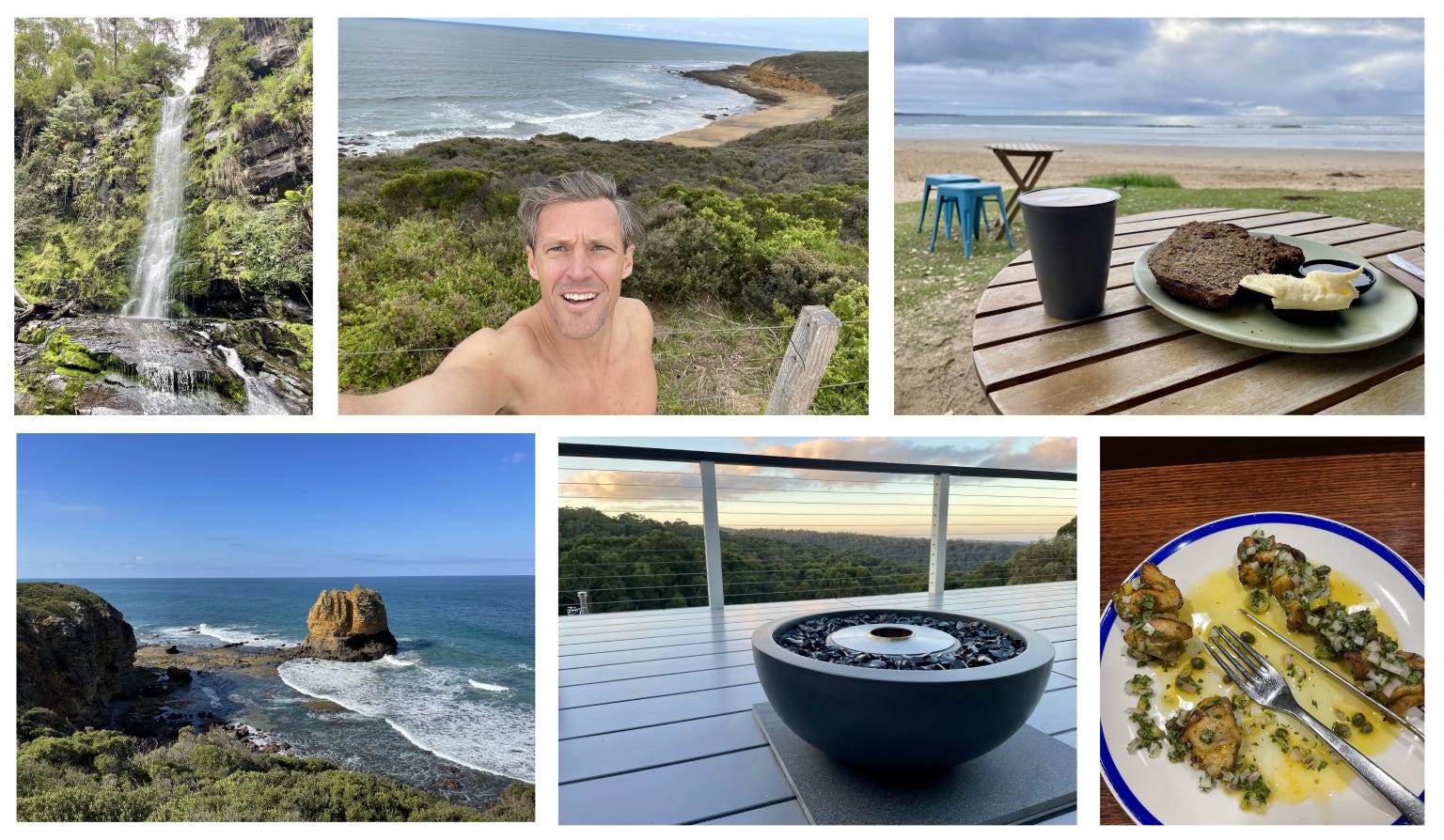
I flew home with an obvious question for any real estate entrepreneur: if this place is this good, why isn’t more American capital here?
The answer isn’t that the opportunity is missing. It’s that the playbook is only now arriving.
The playbook
For the last 20 years, some of the best risk-adjusted money in US real estate came from a single, repeatable move.
Find a boring asset class still owned by mom-and-pops: self-storage, manufactured housing, car washes, RV parks, vet clinics
Roll up the scattered pieces, professionalize the operations, create synergies, market better, etc.
Then sell the assembled portfolio to a big institution at a lower cap rate than you paid for the parts.
You made money twice. Once on the operational lift, and again on the cap-rate compression that shows up the moment a large buyer wants scale.
Everyone in the US knows this now. The assets are priced for it, and the easy returns are mostly gone.
Australia is where that game is just starting. Same fragmentation, same mom-and-pop ownership, and, most importantly, the institutional buyers are already lining up to take finished portfolios off your hands. The ending is proven, but the middle is wide open.
Why it works here
Three things make Australia the right place to run this play, and none of them require a spreadsheet to understand.
It’s a safe place American money forgot. Australia is one of only about ten countries in the world rated AAA by all three major agencies, and it went roughly 34 years without a recession. For a decade, US investors chased yield into Europe and riskier emerging markets and skipped the most stable economy in the Pacific. It’s under-owned by American capital, which is why there’s still room to move before prices reflect it.
The country is still growing. While the US and Europe flatten out or shrink, Australia’s population keeps climbing, headed toward about 31.5 million by the mid-2030s, mostly through immigration. More people every year means more demand for the buildings underneath these businesses. You’re investing with the tide, not against it.
There’s a deep-pocketed buyer waiting at the finish line. Australia requires workers to save for retirement, and that rule has built a A$4.4 trillion pension pool, on its way to A$8 trillion. That money has to be put to work at home, and it buys these kinds of stabilized, income-producing portfolios. So when you’ve done the hard aggregation work, there’s a natural, well-funded buyer ready to purchase it. The hardest part of any roll-up, the exit, is already solved.
Put simply: a safe country, a growing one, and a guaranteed buyer at the end.
Where to point it
The play only works if you aim it at the right asset classes: fragmented today, institutional tomorrow. A few are lining up.
Self-storage is still about half-owned by independent operators, and the big exits are already printing. Brookfield and GIC just took National Storage private for roughly A$4 billion. The window to aggregate is open right now.
Land-lease communities, essentially professionally run manufactured-housing neighborhoods for retirees, are moving from a sleepy caravan-park world into a real institutional class. Aveo sold for A$3.85 billion, and GemLife went public at around A$750 million. An aging population does the rest.
Childcare property trades on long, government-backed leases where the tenant covers most costs. A record A$1.44 billion changed hands in 2025, and it’s still mostly private ownership consolidating toward institutions.
Then there’s medical office, the one still earliest in its cycle, and the one I find most interesting. Roughly 92% of it sits outside dedicated fund managers. Owners are capital-constrained and selling piecemeal, often off-market, and buildings are trading below what it would cost to rebuild them. It’s the textbook version of the setup that made fortunes in US storage 15 years ago.
None of this is exotic. It’s the most familiar strategy in American real estate, but pointed at a market that hasn’t been picked over yet. And it’s itching for that fast-growing bucket of US private wealth money.