

I’m hosting a live interview with my buddies at A4 team tomorrow, 10/8 at noon ET to discuss this opportunity in the luxury housing market. Request to join.
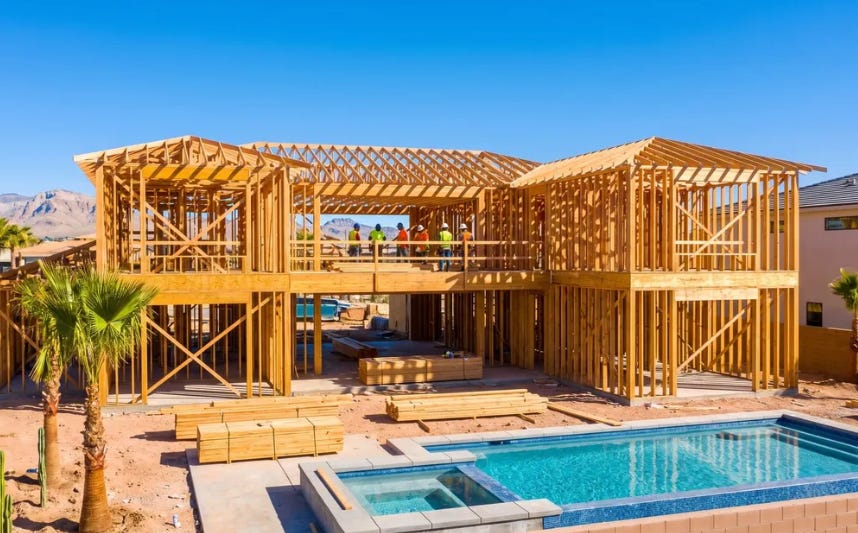
A builder I know in Greenwich spent most of this past spring trying to finance the construction of a single-family luxury home.
It was a teardown in a good neighborhood converting four bedrooms to six. He had the lot under contract, all the plans, and what has become well-known, reliable buyer profile in the Fairfield markets: a family moving out of the city, one of them in finance, two young kids, need to get out of the Manhattan apartment for a backyard and a club membership, or two.
What he could not get was a construction loan.
His regional bank that had funded him for a decade suddenly decided to stop funding spec construction. “Sorry having some issues with the examiners, check back next year.” The next three banks said versions of the same thing. So he ended up borrowing at an embarrassingly high rate vs. what he paid in 2021 via a private lender he found through his attorney
Not surprisingly, the house sold before it was finished - all cash - with no appraisal contingency, rate lock, or mortgage to a buyer.
But it highlights an important market opportunity:
The wealthy buyers of these houses operate in an economy where interest rates are a rounding error.
The builders of the same houses operate in an economy where credit has effectively disappeared.
Two completely different financial climates related to the same asset.
That is the K-shaped economy, and most of us have only been reading about the top half of the K in the context of equities and spending data.
But it’s now showing up in the housing markets with much sharper edges.
The split few people are pricing
The data on the American consumer has been split for three years now.
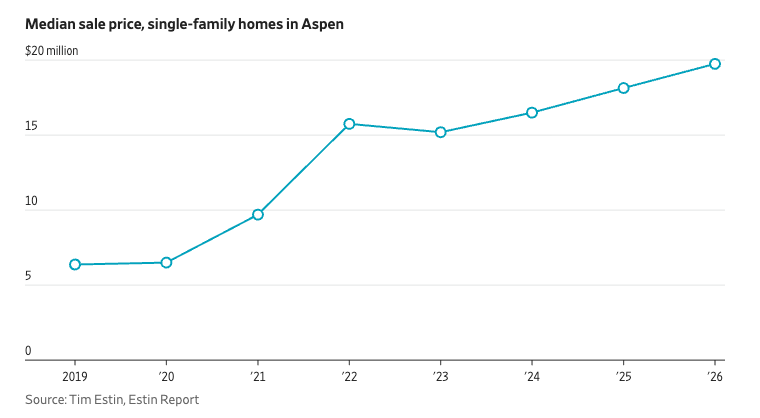
The top decile of earners drives an outsized and growing share of consumption. Household equity at the top is at records.
Meanwhile the bottom half is carrying record credit card balances, delinquencies are climbing on auto paper, and anything touching the subprime consumer has been a minefield.
Tricolor, First Brands, the whole run of private credit stress in the last year… look at what actually broke and you will find it clustered at the bottom leg of the K.
Housing inherited the same split.
Entry-level demand is rate-sensitive, mortgage-dependent, and brittle.
The luxury end is cash-rich, rate-indifferent, and in many markets still supply-starved, because nothing new has been / can be built in the towns where HNWIs want to live.
So we have an asset class where demand at the top is the most durable it has been in a generation, and the capital that funds the development has gone the other direction.
Banks retreated from construction and spec lending, hard
Non-agency commercial real estate origination by banks fell from roughly 43% of the market to 24% in about two years
Regional banks pulled back furthest from exactly the kind of loan my builder needed.
Meanwhile, the large residential transition lenders - the Kiavis and Genesises and Anchors of the world - built their businesses around securitization. Securitization needs volume and sameness: thousands of loans, mostly under a million dollars, in pools that can be easily modeled by a rating agency can. But a $4 million ground-up build on a half-acre in Westchester does not fit in that pool. It is too big, bespoke, and there is only one of it.
Which leaves the most creditworthy corner of American housing financed by, roughly, nobody.
Lending where you live
I have spent the last few weeks with A4, the credit platform launched out of Atlas Real Estate Partners, who is filling this gap to fund the construction of luxury homes.
Atlas has been an owner-operator since 2009, $2 billion of real estate, more than 10,000 apartments.
Now they’re drawing a map around the most desirable neighborhoods in the US, and lending to the developers building in these supply-constrained markets.
Their loans are in Westchester, Fairfield County, and the Mountain West: Colorado, Jackson Hole, Montana. Eleven loans so far, roughly $29 million deployed, and nine of the eleven are luxury single-family construction. First position with conservative LTVs and personal guarantees from seasoned builders.
Read that list of towns again and consider where the readers of this letter and our broader Thesis Driven audience lives, vacations, and owns property: Scarsdale, Greenwich, Aspen, Bozeman, etc.
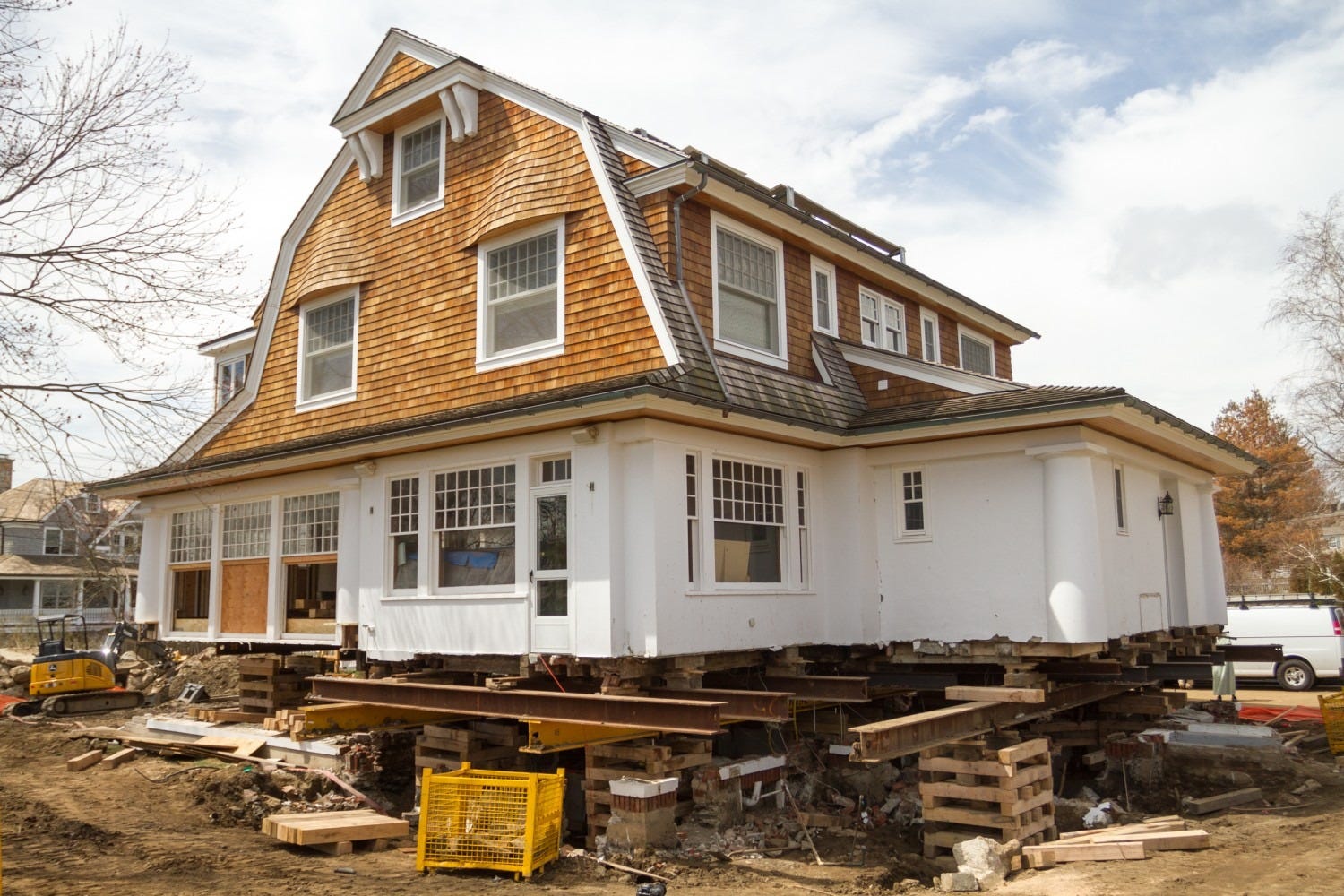
For this audience, the collateral behind these loans is not an abstraction in a spreadsheet somewhere in the Sun Belt. For a lot of you it is a street you have driven down.
Which is an advantage for investors when you can independently price the collateral.
You will know, without being told, whether $4 million on that lot is conservative or aggressive. Most private investors never get to apply that kind of knowledge to a credit investment.
What this actually is
Strip away the structure and this is a loan to a professional builder, secured by a house, in a town where houses sell, to a buyer who does not need a mortgage.
It pays monthly; comes back in about a year; and then it goes out again.
It is not a bet on rates. And it is not a bet on cap rate compression or on the Fed.
It is a bet that affluent families keep wanting homes in a handful of supply-constrained towns, and that the institutions who used to finance those homes are not coming back quickly.
Here is the lesson I would take from the builder in Greenwich, though:
When an economy splits in two, the money usually notices one half before the other. Right now the capital markets have correctly identified that the bottom of the K is dangerous, and have mostly concluded that housing credit is therefore dangerous. That is a category error, and category errors are where private investors get paid.
Join us tomorrow, 10/8 at noon ET to weigh in on the conversation - request access.