

I’ve always been romantically attached to the idea of being a farmer - working outside all day, no cell phone, living off the land, driving a tractor at 4 miles per hour and calling it “my commute”, etc.
Then I remember that actual farming involves no money, no vacations, no air conditioning, and a 4 AM alarm clock 365 days a year.
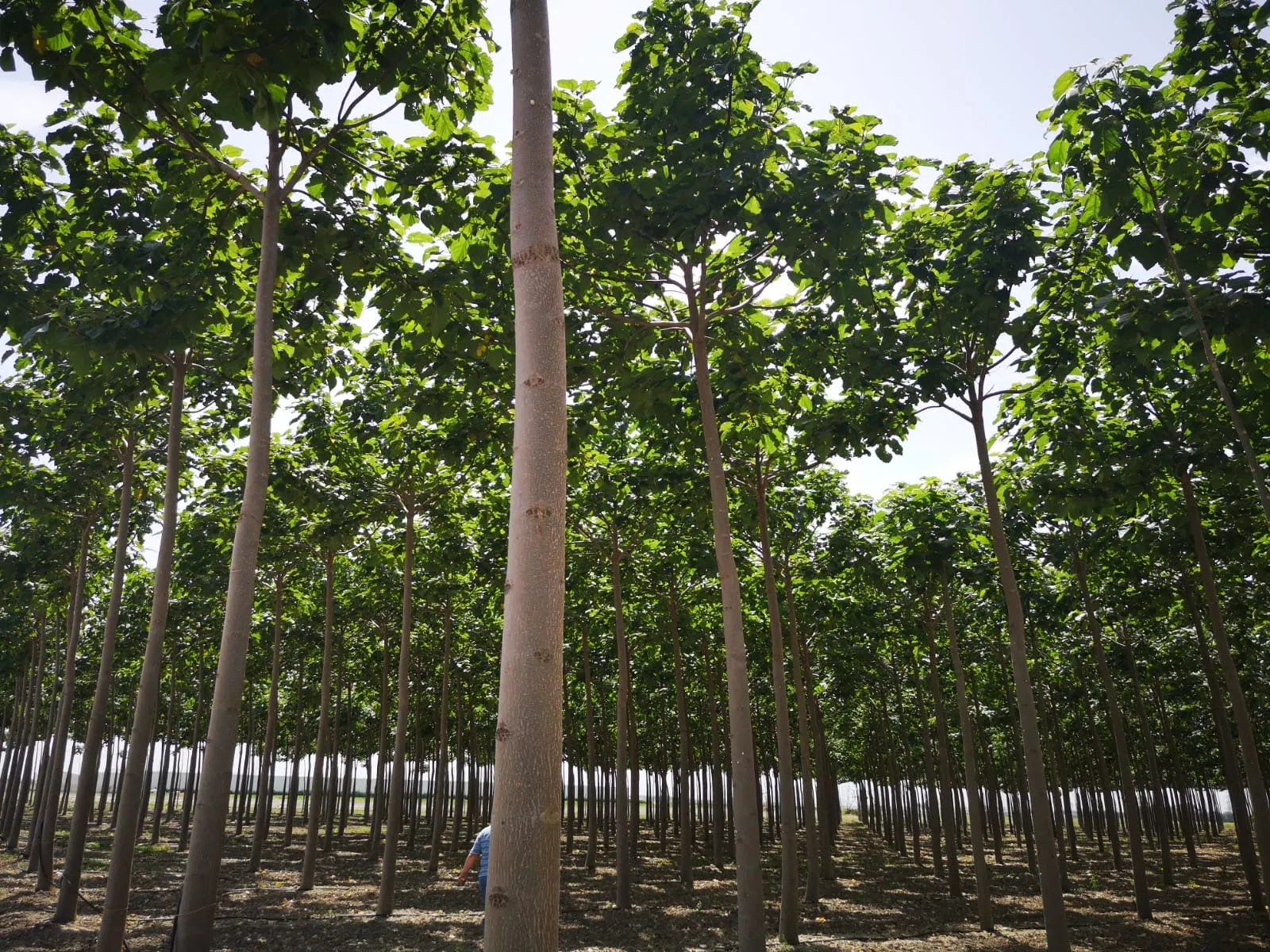
But my friend Darin Turner might have found the Goldilocks scenario: paulownia tree farming. Paulownia is a fast-growing (like almost invasive, 20-feet-in-the-first-year fast growing) species of hardwood that is light but strong and used in everything from boats to window frames to violins to surf boards.
Each tree generates roughly $860 in profit over an 8-10 year harvest cycle (vs. oak, maple, etc. that take 40) and regrow multiple times.
And the company Darin (who is the former CIO of Invesco) is building an institutional platform around, World Tree, has 8,000 acres of them planted across 375 farms in five countries.
I’m talking to Darin about it today at 3 PM ET (link here if you want to join live).
If you can’t make it, here’s the skinny
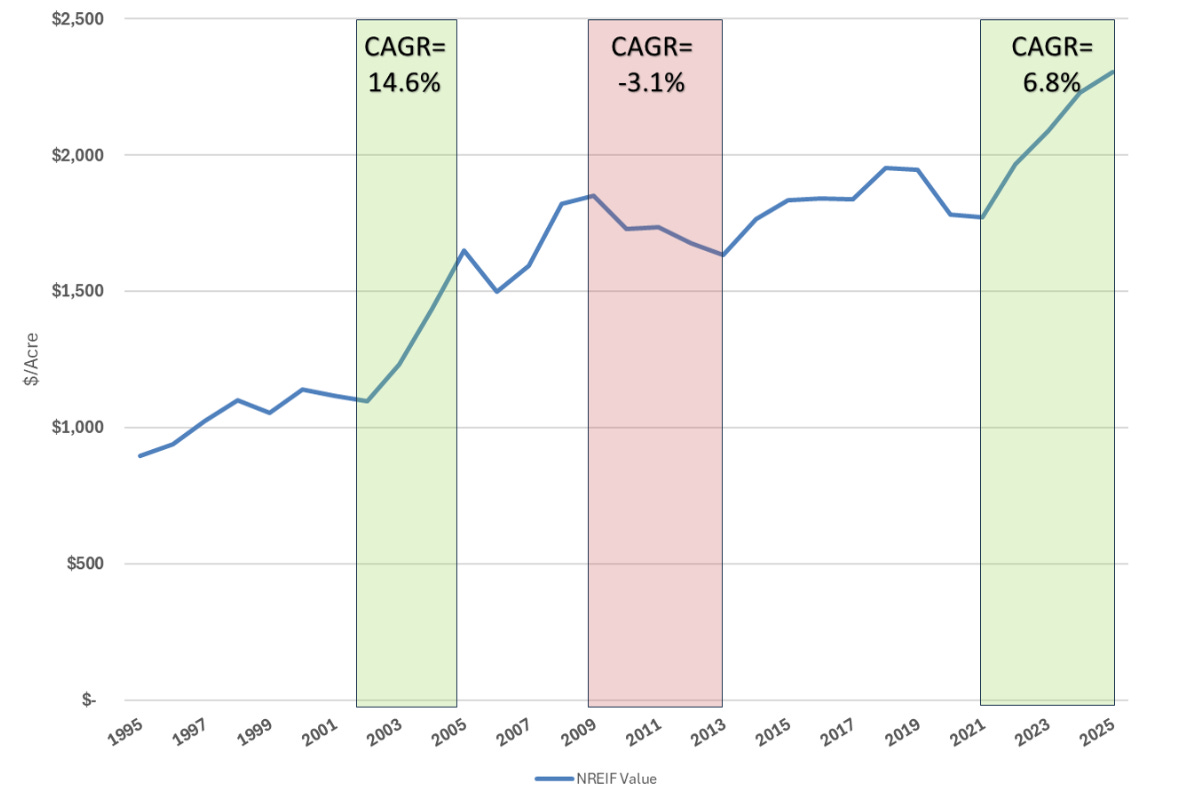
Timber has been one of the best-performing real asset classes for three decades. The NCREIF Timberland Index has delivered annualized returns above 8% with almost no correlation to equities or bonds. On paper, it’s the perfect portfolio diversifier: a physical asset that grows in value literally by growing, that doesn’t care about interest rates or earnings calls or what the Fed chair said on Tuesday.
And almost no private investors own it.
The reason is simple: most trees take forever to grow.
Traditional hardwood rotations for oak, maple, and walnut run 25 to 40 years. A family office that plants red oak today won’t see a harvest until the 2050s.
Meanwhile the institutional timber market is dominated by TIMOs and public REITs like Hancock and Weyerhaeuser that operate at that pace, with investment minimums in the tens of millions. The asset class has been structurally closed to private capital since it started outperforming.
Paulownia is a completely different animal.
The species grows 10 to 20 feet in its first year. It reaches harvestable size in 8 to 12 years. And after you cut it down, the root system regenerates and produces another harvestable tree, repeating for five to seven additional cycles without replanting. One planting produces decades of harvests. The hold period drops from “your grandchildren will thank you” to something that actually fits inside a fund life.
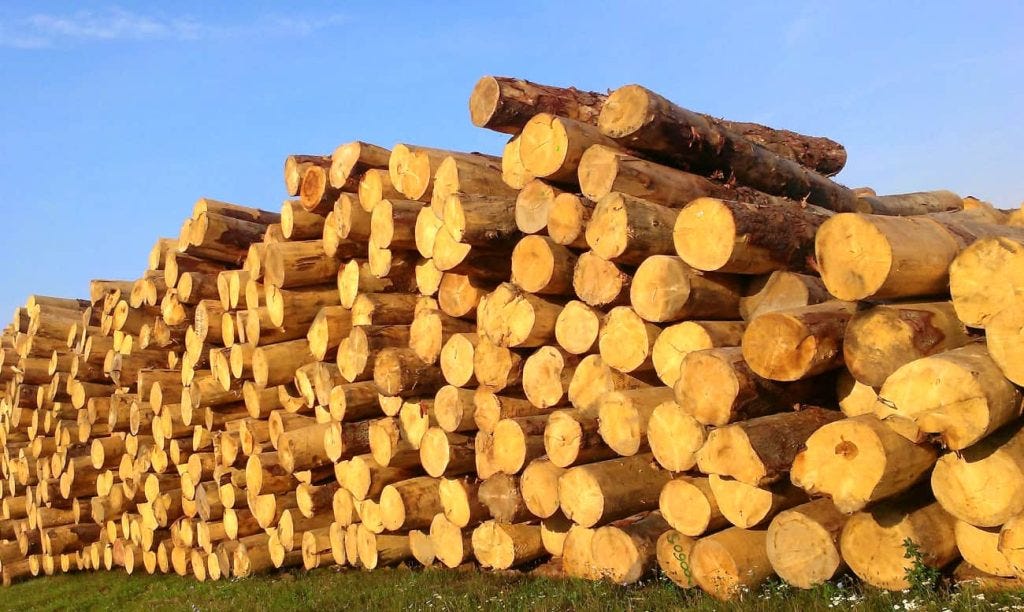
And it’s not a novelty wood. Paulownia is a genuine specialty hardwood, lighter than balsa but stronger than most softwoods, used in furniture, exterior siding, musical instruments, marine applications, and surfboards. It’s been a premium timber species in Japan for centuries.
The reason it hasn’t scaled commercially in the West is that nobody built the genetics program or the supply chain to do it until now.
World Tree has spent the last decade solving that problem.
They’ve developed proprietary genetics across 25 to 30 site-specific varieties, optimized for different climates and soil conditions. Their farms span Central America, the U.S., and Europe. First commercial lumber shipped in December 2025. The company is past the “is this real?” phase and into the “how do we scale this?” phase.
Which is why Darin is stepping in.
He spent nearly two decades at Invesco as CIO of Listed Real Assets - so he doesn’t usually gets excited about a tree unless the tree has a compelling risk-adjusted return profile.
His firm, Signal Line, is building the institutional-grade structuring and capital markets infrastructure to make paulownia timber investable at family office and private wealth scale for the first time. The goal is to take an asset class that has outperformed for 30 years and remove the two barriers that kept private capital out: the hold period and the access point.
The pitch, stripped down:
an 8 to 12 year hold on a physical asset that literally grows,
regenerates after harvest,
produces a specialty product with established global demand,
has three decades of index returns above 8 percent, and
has zero correlation to the things keeping your LPs up at night.
And the downside is protected by the dirt and the timber on it. The upside is a function of biology.
I don’t know how many asset classes can make that claim.