

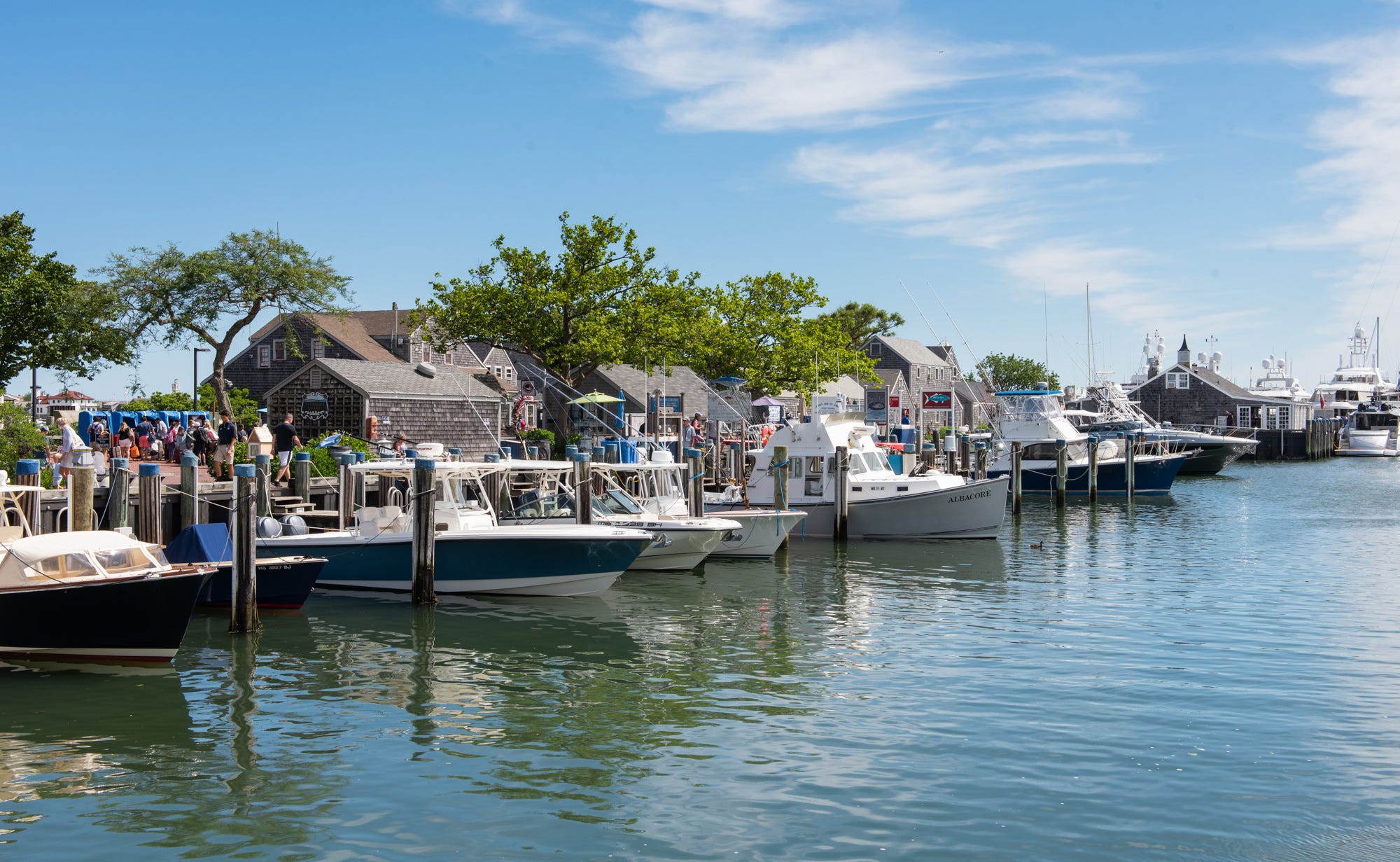
I had coffee last month with a marina operator I’ll call “James”. He runs twelve marinas across the Northeast — roughly 4,000 slips, a fuel operation, a handful of dry storage facilities, and a boat service business he bolted on two years ago. Total AUM is somewhere around $180 million.
James doesn’t have a fund and has never raised institutional capital. His investor base is a patchwork of family offices, a few HNW individuals he met through a friend’s friend, and his own balance sheet. He operates every asset himself — dealing with the Army Corps of Engineers when a dock permit stalls, negotiating fuel margins with distributors, fielding a call at 6 AM when a storm rips a dock off its pilings in Fort Lauderdale.
He’s also generating a net yield his investors can’t find anywhere else.
His portfolio averages north of a 9% cash-on-cash return, in an asset class where Blackstone paid $5.65 billion for Safe Harbor Marinas and Bain Capital is rolling up slips on the East Coast at compressed cap rates. James beats them on yield because he
Stays small,
Operates with intensity, and
Knows every slip in his portfolio by name.
He doesn’t need to hit a $5 billion fund target. He needs to find the next off-market marina on the Gulf Coast before a consolidator does.
James is an archetype. And he’s everywhere.
The operator nobody is writing about
There are hundreds of operators like James building portfolios in asset classes that didn’t have names ten years ago — outdoor hospitality, cold storage, small bay industrial, surf parks, branded residential, RV parks, industrial outdoor storage. They run somewhere between $50 million and $300 million in AUM. Small teams, five to twenty people. Operationally obsessive in a way that would be unrecognizable to someone managing a stabilized Class A multifamily portfolio.
What makes them different from the last generation of real estate entrepreneurs is how they got here. James didn’t start by raising a fund and then going looking for marinas. He started by operating one marina and learning the business from the inside. The portfolio grew because he got good at operations, not because he got good at pitching LPs.
Most institutional real estate businesses are built the other way around — the capital comes first, the operating capability gets figured out later.
And it’s the reason James can generate the returns he does. His returns aren’t good despite his small scale… they’re good because of it.
He sources off-market. He operates with a cost structure that a 200-marina platform can’t touch. He makes decisions in hours that a corporate operator routes through three committees over six weeks. The moment you institutionalize the portfolio — add the IR team, the fund admin, the quarterly reporting — you add cost, slow down decision-making, and compress the very returns that made the investment attractive in the first place.
And the operational complexity of his asset class is what protects all of this. Marinas aren’t apartments. You can’t underwrite them on a rent roll and a cap rate. There’s a fuel business, a service business, a slip rental business, a dry storage business, and a retail operation — all running simultaneously on the same waterfront property, all subject to weather, permitting, environmental regulation, and seasonal demand. That complexity keeps the passive capital out. It rewards the people who actually understand the business — and it punishes the ones who don’t.
James also isn’t just buying buildings. He’s built a marina operating company with proprietary vendor relationships, fuel purchasing agreements, dock maintenance protocols, and a reputation on the Gulf Coast that makes every new acquisition easier than the last one. The operating company has value that exists apart from the real estate.
The capital problem
The infrastructure of real estate capital markets was not built for someone like James.
Placement agents won’t touch a $30 million raise — the economics don’t work for them. They need $200 million-plus to justify the effort. The conference circuit is designed for institutional sponsors with glossy pitch decks and five-person IR teams. The LP databases filter by AUM, track record length, and fund size, and James gets screened out of all three.
The capital that would actually be a good fit — family offices, HNW individuals, small RIAs — can’t find him. There’s no directory of marina operators generating 9% cash yields. There’s no placement agent connecting a family office in Dallas with a twelve-marina portfolio in Naples, Florida. These matches happen, when they happen at all, through personal networks and luck.
So you end up with a market that’s broken in both directions. Operators with strong businesses and real yields can’t raise. Investors with the right appetite and time horizon are stuck choosing between institutional funds that are too big and too expensive, or direct deals they stumbled into with no infrastructure around them.
Private wealth and the $50M Operator
Family offices now put somewhere between 45% and 55% of their portfolios into alternatives, up from about 30% a decade ago. They’re making opportunistic bets on real estate while a lot of institutional capital sits on the sidelines. And they’re far more willing to explore asset classes that pension funds won’t look at — because the check sizes are too small, the sectors are too weird, or the operators are too early.
The $50M Operator is, in a lot of ways, exactly what this capital is looking for.
A family office can write a $2 million check into James’s next marina acquisition. That check is meaningful for him and irrelevant for a $500 million fund. Family office capital doesn’t need quarterly liquidity or a J-curve narrative for an investment committee. It can back an operator for a decade and compound alongside the business, which is what James actually needs — not a three-year hold with an IRR bogey.
And the yield spread is enormous. Institutional real estate in 2026 is generating mid-single digits. James is north of 9%, and operators in other niche asset classes are doing similar numbers. That spread exists specifically because these operators haven’t scaled past the point where their operational edge gets diluted by corporate overhead. The premium is the boutique.
A family office that backs five or six of these operators across marinas, outdoor hospitality, cold storage, and small bay industrial has built a portfolio of high-yielding, uncorrelated real estate exposure that no institutional fund in the market can replicate.
I think this is where private wealth real estate investing is heading. Not blind pool funds. Not REITs. Curated exposure to the operators generating real alpha in the most operationally complex corners of the market.
What could go wrong
When you invest with a $50M Operator, you’re betting on a person. If James gets hit by a bus, the portfolio has a problem that a Blackstone-owned platform would not. That key-person risk is real, and institutional investors have spent decades engineering it out of their portfolios for a reason.
There’s also the growth trap. At some point, James needs a real back office — a CFO, a head of IR, a fund administrator. Those hires cost money and add complexity, and they start to erode the characteristics that made the business attractive. The operators who navigate this well will be the ones who professionalize their infrastructure without professionalizing their operations — who build the back office without losing the 6 AM phone call.
And then there’s the problem of actually finding these people. The $50M Operator is, almost by definition, invisible. No PR team. No PERE conference presence. No database listing. You find them through niche media, operator communities, word of mouth, and the kind of ground-level market intelligence that most investors don’t have and aren’t set up to get.
The investable middle
I wrote a few months ago about the K-shaped economy hollowing out the middle of real estate — the $300 hotel room, the Class B office, the aspirational-luxury condo. The middle is dying in those categories because it lost its reason to exist.
But there’s another middle in real estate that’s doing the opposite. The $50M Operator occupies a middle between institutional platforms and individual deal sponsors, and that middle is thriving precisely because it’s hard. The operational complexity, the small scale, the niche asset classes — these aren’t bugs. They’re the reason the returns are there.
For most of these operators, staying between $50 million and $300 million in AUM isn’t a phase. It’s the strategy. The boutique is the alpha. The yield premium disappears the moment you try to scale past the operator’s edge.
The operators are already here, building real businesses in asset classes the rest of the market is still trying to name. The capital is looking for them. The infrastructure to connect the two is what’s missing — and what’s being built right now, one marina at a time.
Nice article. I agree with the thesis. A lot of capital chasing niche assets before understanding the small details that drive return and expertise. I’m a bit confused on the James story. NE portfolio, reputation in the gulf coast, answering calls for a Ft. Lauderdale dock? It feels like AI combined a few different threads. It doesn’t change the meat of the article, but it feels AI missing or leaving out details to connect the dots. Looking forward to reading more.
Good article Paul. As a boutique (literally the name of my company) operator finding those UHNWs and family offices is hard, and a huge distraction from growing my business. Build a two sided marketplace for capital providers like this, and operators like me, and you’ve got a huge opportunity!