

Tomorrow, we’re breaking down this big-box evolution—and the related mispriced retail real estate opportunities—with Brixton at 3pm ET. Register here.
Growing up a Yankees fan, every break in the game came with the same advertisement jingle: “Gotta go to Mo’s.”
Modell’s Sporting Goods ran ads on MSG (later, YES Network) so relentlessly that by the time I actually walked into one, sometime around age ten, I thought I had arrived at the center of the known universe—it had walls of jerseys, racks of cleats, and a whole aisle of just baseballs. It was, genuinely, heaven.
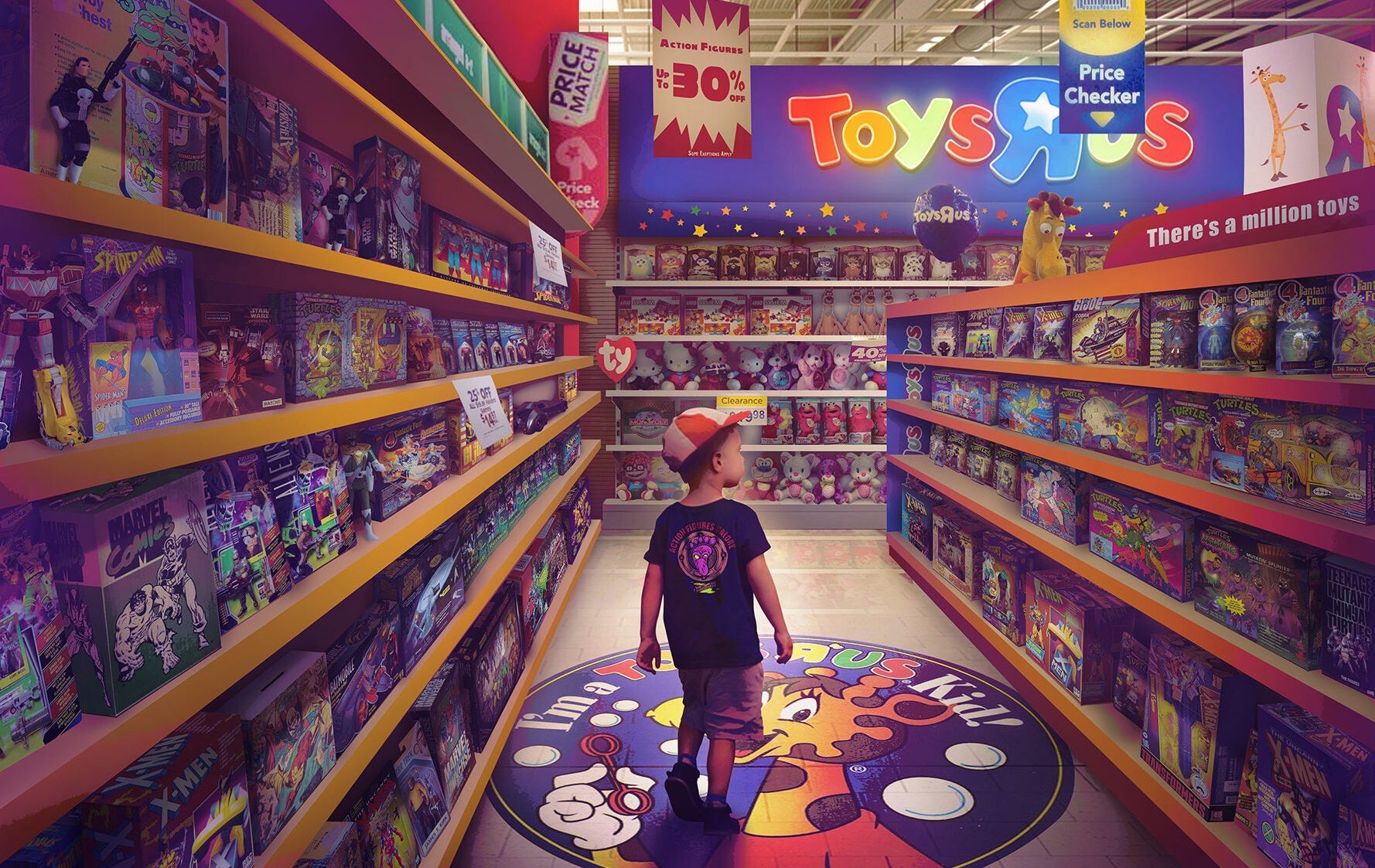
Modell’s was was part of a generation of big-box retailers that created 90’s retail destinations. Barnes & Noble, where a kid could sit on the floor reading for two hours without bother. Dick’s Sporting Goods, with the batting cages and the putting green. Circuit City, where families went on Saturday afternoons to stand in front of wall-mounted TVs they couldn’t yet afford.

Then, Amazon killed them.
Circuit City was gone by 2009; then Borders in 2011. Pier 1, Toys “R” Us, Bed Bath & Beyond, Sports Authority, Tuesday Morning: the list kept growing for a decade. And the lesson the real estate market took from them was: “big-box retail is a melting ice cube; avoid them as anchor tenants.” Buy small-box strips tenanted by restaurants and salons and urgent cares, i.e., the categories Amazon cannot replicate.
That lesson was half right.
The retailers that died were the weakest operators in categories where e-commerce had the clearest advantage. But the retailers that survived did something the market has not fully re-underwritten—they stopped being stores.
The Big Box Evolution
Kroger
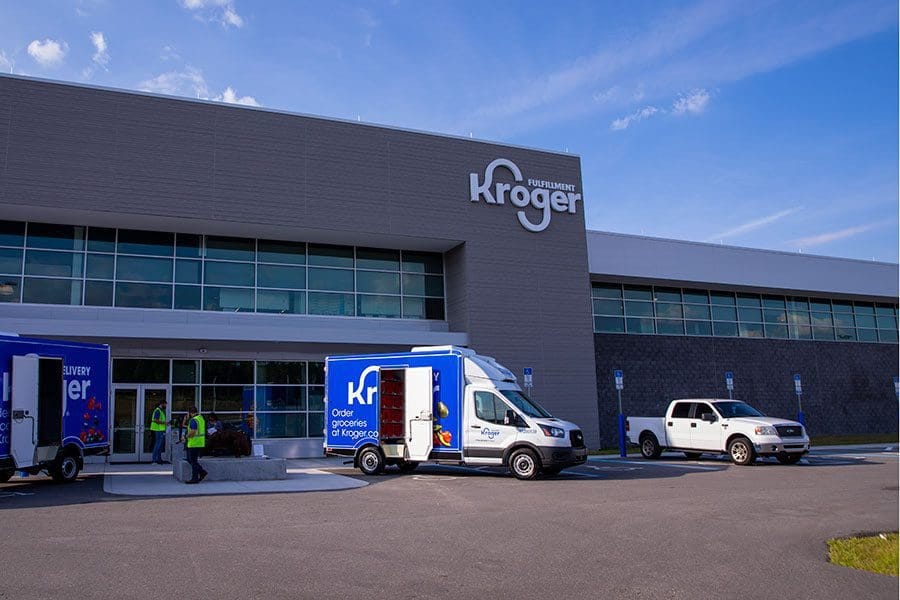
They are really a last-mile fulfillment hub that happens to sell groceries. Seventy percent of online grocery orders fulfill from the store, not a warehouse, with billions invested in back-of-house staging, racking, sortation, and curbside infrastructure.
But the margin story is the real story. Retail media, a concept pioneered by Amazon and Walmart over the past five years (retailers selling ad space across their digital and physical properties to consumer brands), generated approximately $1.5 billion of Kroger’s roughly $5 billion in earnings last year. Private label sales hit a record $282.8 billion nationally in 2025, now 23.5 percent of total grocery volume, redirecting margin from national brands to the retailers themselves.
A Kroger in 2026 is a fulfillment center, an advertising platform, and a private-label brand house operating behind a grocery entrance.
Target
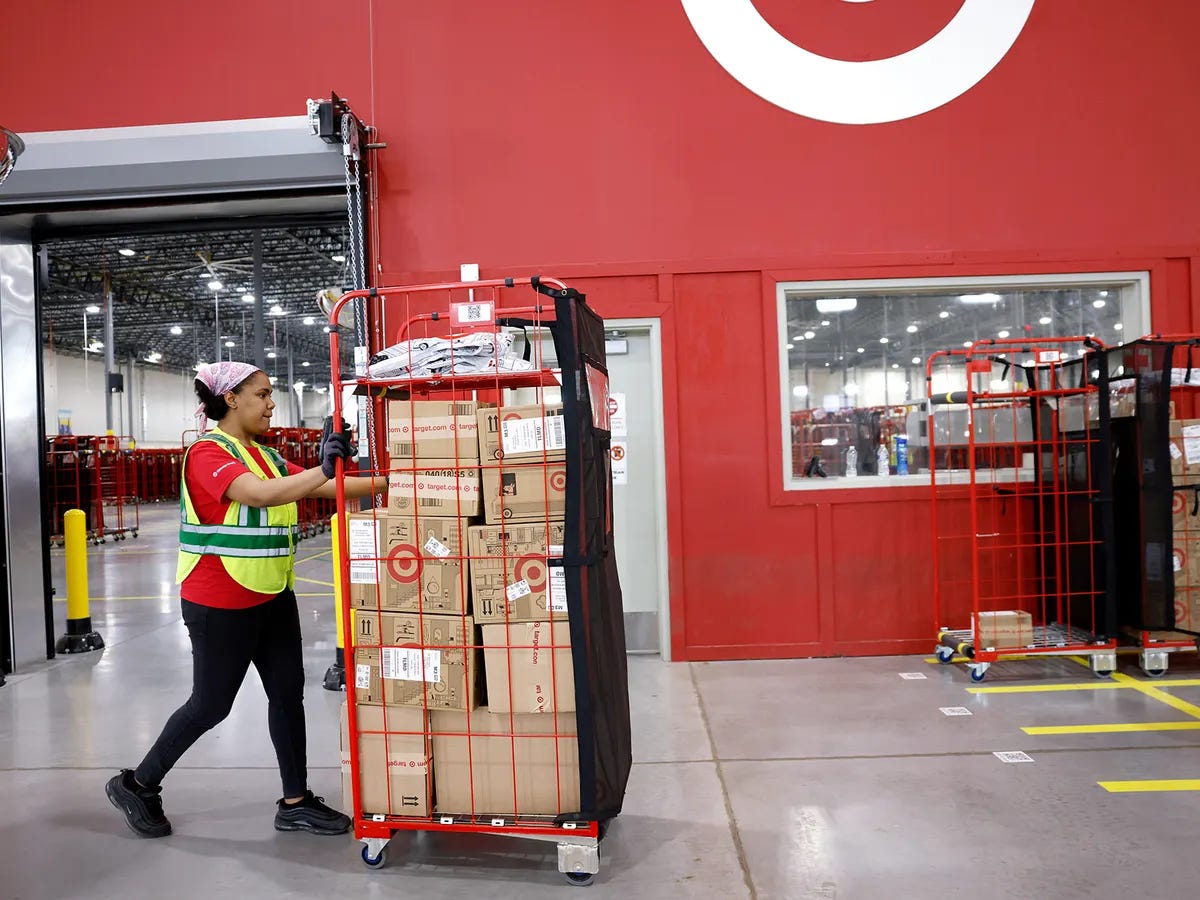
Target fulfills 97 percent of its digital orders from stores—the same buildings where customers push red carts past end caps. Product arrives through the loading dock and, increasingly, never touches a shelf. Store-based fulfillment across major retailers grew 35 percent or more annually from 2020 to 2025.
A retailer cannot close a store that fulfills half its digital volume without dismantling its own logistics network. The switching cost is not a lease penalty. It is the destruction of a supply chain node.
Best Buy
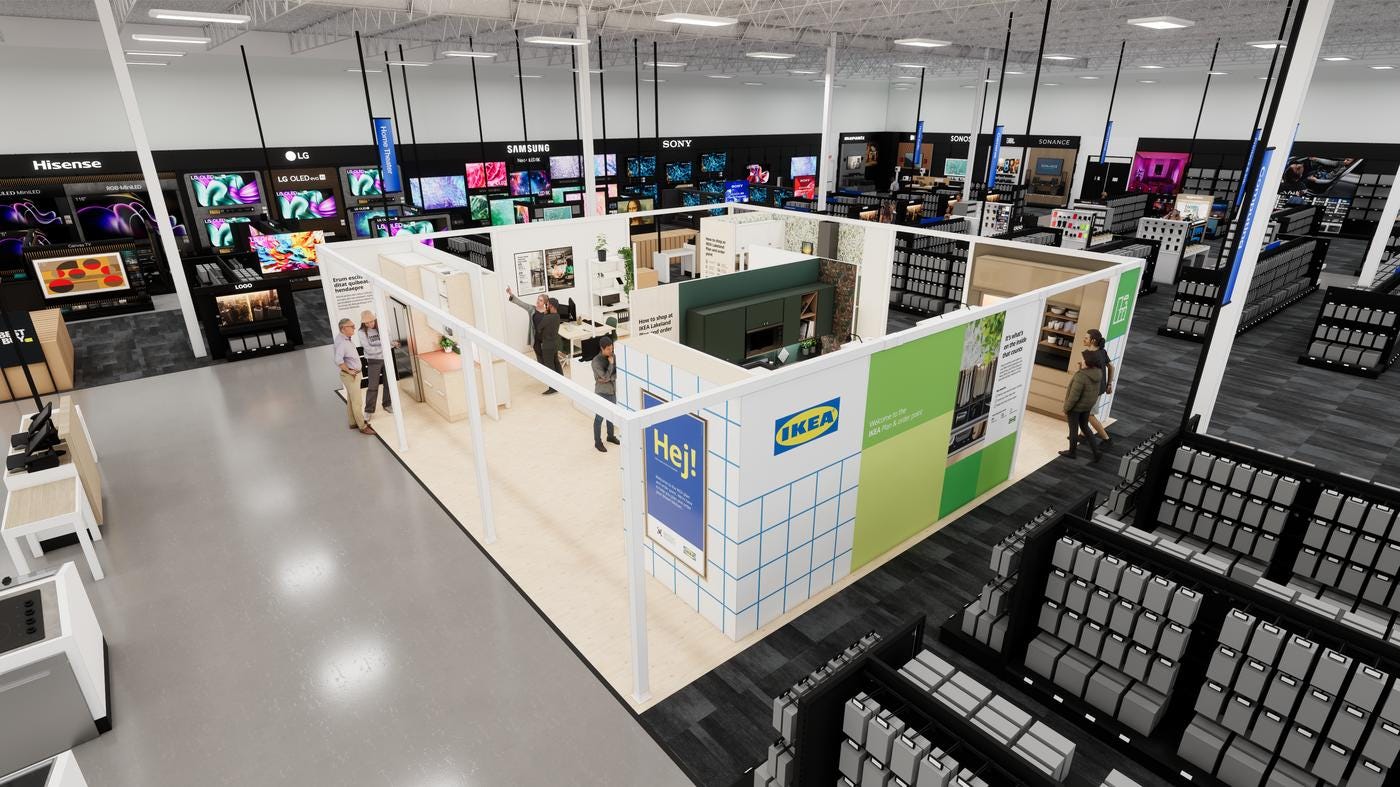
Best Buy is an omni-channel revenue generator. They run Geek Squad installations, Best Buy Health for seniors, in-home tech support, and store-within-a-store partnerships with IKEA for kitchens and laundry.
Walk into a Best Buy in 2026 and the sales floor is one layer of a business that now includes services, healthcare, and logistics. The relocation friction on a box running a Geek Squad bay, an IKEA display, and a healthcare division is categorically different from the relocation friction on the Circuit City it replaced.
The Same-Day Arms Race
Amazon forced the entire retail industry into a same-day delivery arms race, and the only way to compete without Amazon’s distribution network was to turn stores into warehouses.
The buildings now function as logistics infrastructure:
Proximity to the end consumer,
Loading dock access,
Backroom fulfillment capacity
These are the same attributes that made industrial real estate a generational trade over the past decade, and now describe the operating profile of a grocery-anchored strip center.
But the real estate market has not caught up. Anchored strip centers are trading at 7 percent cap rates in markets where apartments trade at 5 percent. The cap rate spread between anchored retail and comparable asset classes is wider than the fundamentals justify, priced on a version of these tenants that no longer exists. The “retail is dead” crowd is measuring foot traffic, while the operators making money are measuring dock throughput.
Blackstone is on the offensive. In February 2025, it paid $4 billion to take ROIC private, 93 grocery-anchored centers on the West Coast at a 34 percent premium to market. The rest of institutional capital is still catching up, and the window to buy anchored retail at current cap rates is narrowing.
Tomorrow, July 24 at 3pm ET, Thesis Driven sits down with Rob Taylor and Grant Brutten of Brixton Capital to break down the evolution of the big-box tenant, the fulfillment infrastructure layer that locks these tenants to their physical locations, and why the most avoided asset class in retail real estate may be the most mispriced. Register here.