

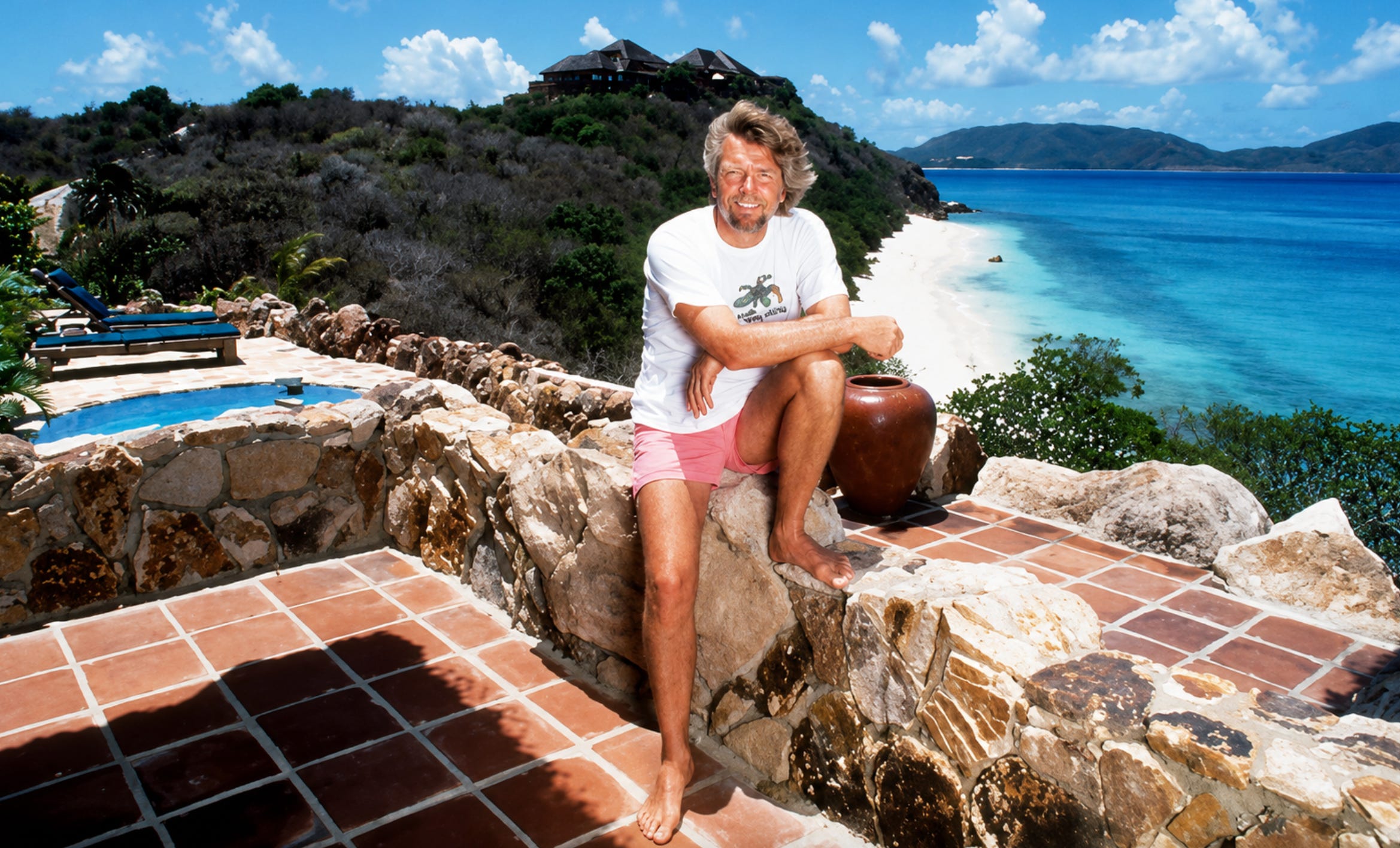
Everyone loves the Richard Branson - Necker Island story. “Cowboy entrepreneur buys luxurious private island for pennies.”
In reality, it wasn’t some genius land grab.
Yes, Richard Branson bought Necker Island in 1979 for $180,000 against an asking price of $6 million, having first offered $100,000 because “that was all he had.” It has become a negotiation parable for business self-help books: lowball everything, and sometimes the seller will say yes.
But he wasn’t actually buying an island cheaply. He was buying an option to build a resort. And the land purchase was 1.8% of the first phase of development.
The condition
The seller was John Lyttelton, the 11th Viscount Cobham, and he refused the $100,000 outright. Then, a year later, he took $180,000, which tells you about how many other buyers were in the room for 74 acres of scrub in the British Virgin Islands with no fresh water, power or docks, and a population of feral goats that had eaten most of the vegetation.
In the sale, the government required the island to be developed within four years, or it reverted to the state.
So Branson, 29 and running an early-stage record label, committed to building a resort in a place with no infrastructure, on a deadline, in a jurisdiction where he nearly failed to get an Aliens Land Holding License because the governor considered the music business disreputable.
So the thing acquired for $180,000 was not an asset. It was an obligation with a clock on it, which is why it was available at 3% of ask.
What had to be built
Everything.
Fresh water on a dry Caribbean island means desalination, which means power, which in 1979 meant generators and fuel delivered by boat.
Then a dock for access, housing for staff, and buildings capable of standing up in a hurricane belt, constructed from materials that arrive by barge at multiples of mainland cost.
The Great House opened around 1982, inside the deadline, at about $10 million in period dollars.
What that capital produced is not a vacation home.
Necker today runs roughly 100 staff for a maximum of a few dozen guests, and rents for something on the order of $102,500 a night.
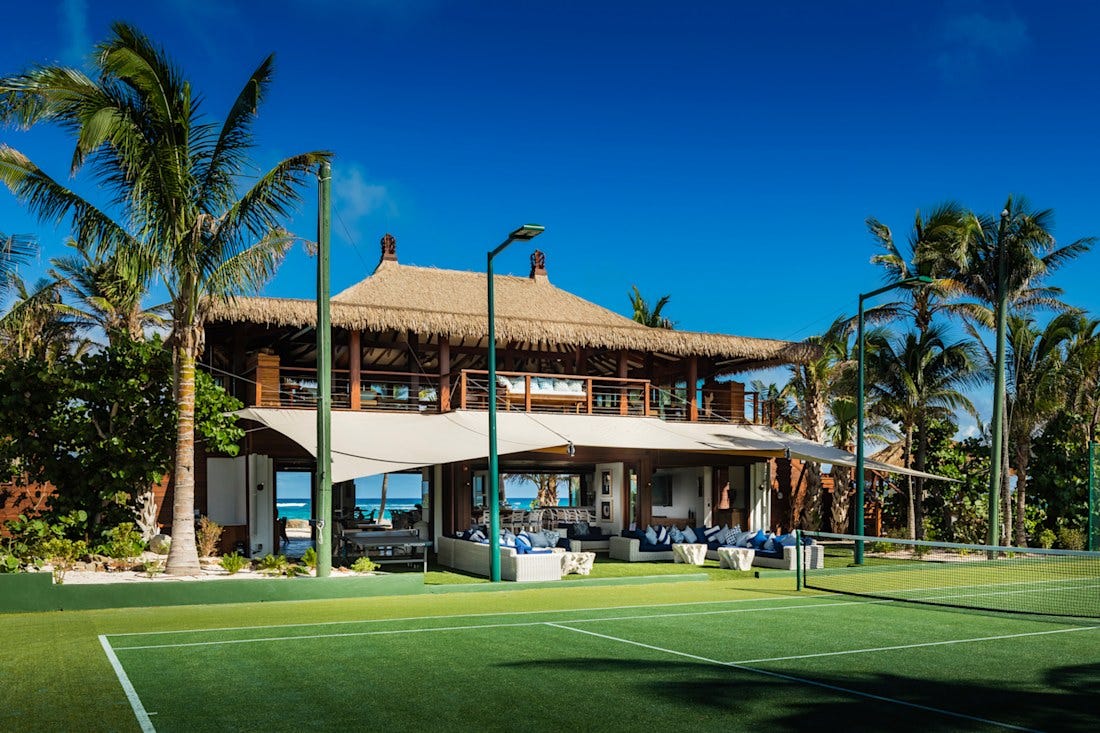
He built a hospitality operating business with a very high fixed cost base and a single location, which happens to look like a beautiful home.
The other thing the capital produced was a rebuild schedule. On August 22, 2011, lightning from Tropical Storm Irene burned the Great House to the ground with about twenty people inside, Kate Winslet among them, all of whom got out.
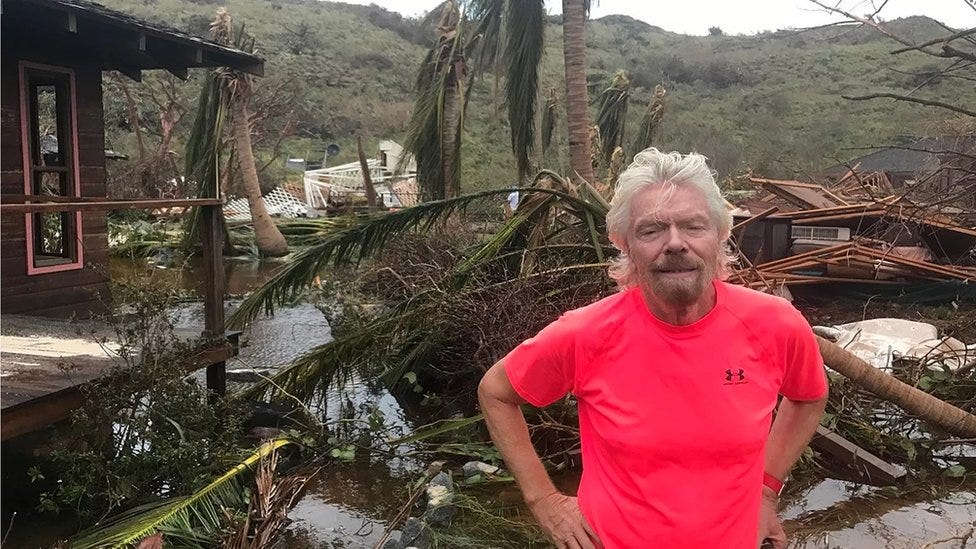
Most of it was rebuilt by April 2018. Twice in under forty years, the improvements were destroyed.
Then, in April 2020, with Virgin Atlantic and Virgin Australia facing collapse, Branson offered to mortgage Necker Island to raise money for the airlines.
Forty-one years of development had turned a $180,000 obligation into something a bank would lend against. The island’s final function was collateral.
The actual private island playbook?
I haven't bought one, but this seems to be the general rule of thumb if you want to take a look at the several hundred islands on the market worldwide, going from anywhere between $74,000 for a quarter-acre in a Nicaraguan lake and $120 million for an atoll in the Maldives.
Price the build, not the buy. The purchase price of an undeveloped island is close to noise. Assume the acquisition is a rounding error against infrastructure, and underwrite the second number first. Islands advertised at $405 an acre are not cheap; they are unpriced.
The discount lives in the obligation. Branson did not get 97% off because he negotiated well. He got it because the island came with a four-year development requirement and a reversion clause. In illiquid markets the price break is compensation for a condition, and the investment thesis is deciding whether the condition is survivable.
Underwrite water and power before anything else. No fresh water means desalination, desalination means continuous power, and continuous power on a remote island means fuel logistics forever. An island without a water answer is not a development site at any price.
Assume no financing at acquisition. Banks do not lend against undeveloped islands. They will lend against a functioning operating business on one, which is a different asset entirely and takes decades to become.
Budget the rebuild into the model. Two total losses in forty years is not bad luck in that geography, it is the base rate. Insurance in the hurricane belt is expensive where it exists at all, and the honest model self-insures.
The island is the cost, but the operation is the asset. A hundred staff for a few dozen guests is the actual business, and the land is the least interesting part of it.
None of which is an argument against buying an island.
It’s an argument for understanding that Branson did not buy an island for $180,000. He bought a four-year deadline, and then spent the next four decades meeting it.