


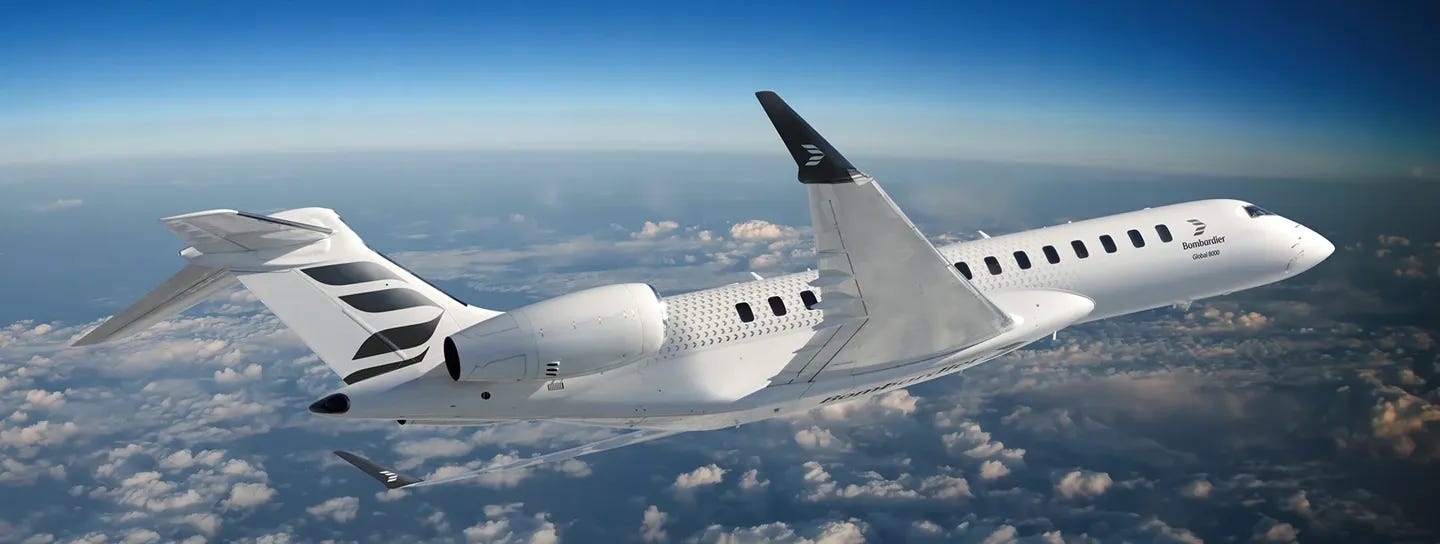
The wait time for a new Bombardier Global 8000 is 2029.
And the global billionaire population just hit 3,110, with 89 new people per day entering “UHNWI” status (+$30mm in net investable assets).

Combine those two facts, and you can come to a pretty simple conclusion: there is a fast-growing (and frustrated) waitlist for private jets.
But the second-order effect is less obvious: all those jets need hangars, fuel, terminals, and tarmac… private jet infrastructure is extremely constrained.
These supply-demand dynamics are powering a niche corner of real estate that's rarely discussed, but will be a major play over the next decade as the K-shaped economy grows.
Some relevant news & facts frame up the sector
KKR bought Atlantic Aviation in 2021 for $4.475 billion. They merged it with Ross Aviation, grew the platform to over 100 locations, and are now selling it to Apollo and Singapore’s GIC for roughly $10 billion. That’s approximately a 15x return on equity in five years.
Yes, this sounds more like a tech multiple than a real estate return, and that’s because private aviation real estate sits at a strange and lucrative intersection:
the physical infrastructure is essential, but
the supply is permanently constrained, and
the demand curve is a function of global wealth creation.
There are 3.4 million business aviation operations in North America annually, up 33% from pre-COVID levels. NetJets alone operates 845 jets. The fractional market has grown 75% since 2019. And the industry calls the gap between aircraft growth and facility capacity “the $10 billion hangar problem.”
The good news for investors: entire ecosystem is investable.
Here’s how the investable ecosystem breaks down
Note: for the aspirational jet owner, I hope, if nothing else, this helps with your private jet IQ in cocktail conversations.
FBOs: The anchor asset
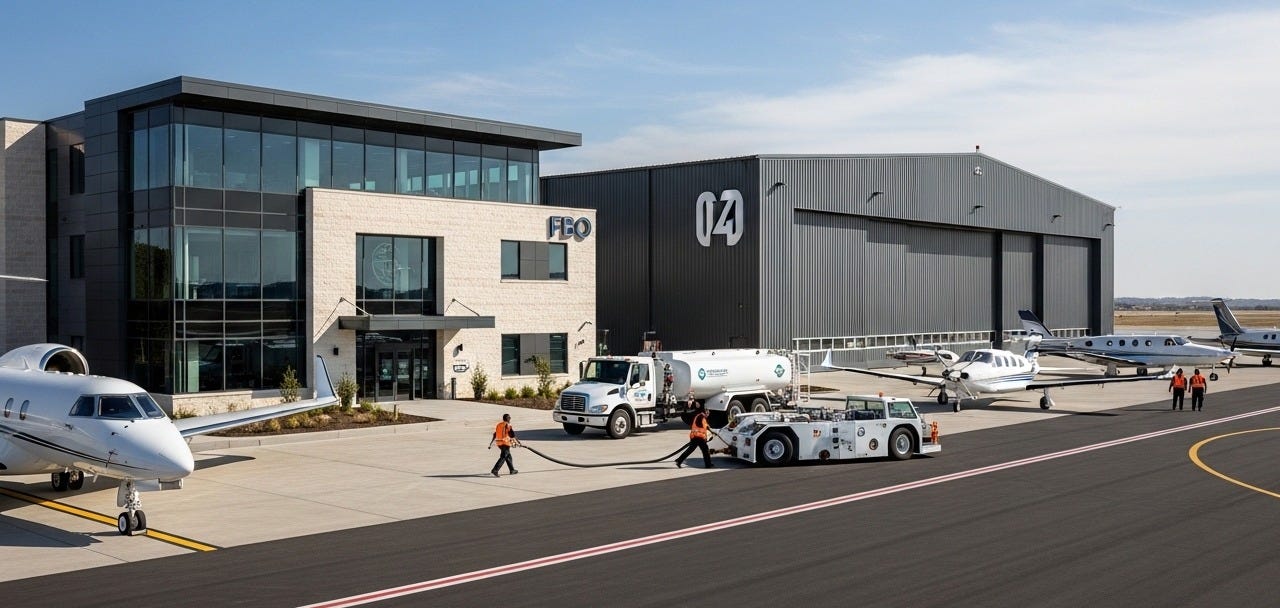
A Fixed Base Operator is the private aviation equivalent of an airline terminal: fuel, hangars, VIP lounges, ground handling, maintenance, concierge. Fuel alone is 50-70% of revenue. There are roughly 3,000 FBOs left in the U.S., down from 5,000 in the 1990s, and the top five chains now control 44% of the market. Mature FBOs run 20-30% operating margins.
Signature Aviation, the largest at 200-plus locations, was taken private in 2021 by Blackstone, Global Infrastructure Partners, and Bill Gates’s Cascade Investment for $4.73 billion.
The consolidation thesis is the same one that repriced self-storage and car washes: fragmented, operationally intensive, capital-constrained independents being rolled up by institutional platforms that can extract margin through scale. Except the supply can never grow. You can’t build a new airport.
Private hangars: A $10 billion bottleneck

In plain English, a personal home/garage for your jet (whereas FBOs are more like hotels.. a place to park your jet while you’re in town).
There is a massive need for these as 71% of U.S. general aviation airports maintain waitlists for hangar space. Teterboro, Van Nuys, and Miami Opa-Locka have three-year waits. Most existing hangars were built in the 1970s and ‘80s for smaller aircraft and can’t fit today’s Gulfstream G700s or Global 7500s. New hangars cost $60 to $200 per square foot to build depending on spec, and lease for $4,000 to $7,000 a month for larger jet spaces.
Sky Harbour Group, an aviation infrastructure company publicly traded on the NYSE (SKYH), operates roughly 1 million rentable square feet of hangar space with revenues growing +50% YoY and a development pipeline targeting 50-plus campuses and over 10 million square feet.
Hangar condos: The niche within the niche
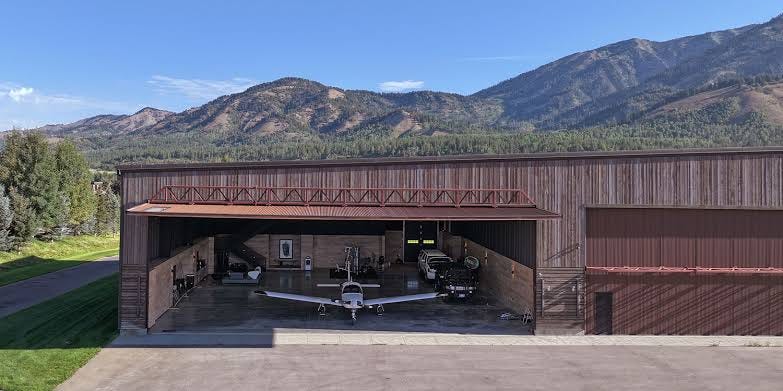
High-net-worth pilots and charter operators are increasingly buying individual hangars on deeded or condominium ownership at airports. Pricing ranges from $300,000 for a basic box hangar to $1.5 million at Addison Airport in Dallas at roughly $460 per square foot.
Developer returns on hangar condo projects run 13-16% unlevered IRR. Some hangar locations have appreciated 400% over the past decade.
Fly-in communities: Residential meets runway
There are over 400 residential airparks in the United States where homeowners store aircraft in attached hangars and taxi to the runway from their driveway.
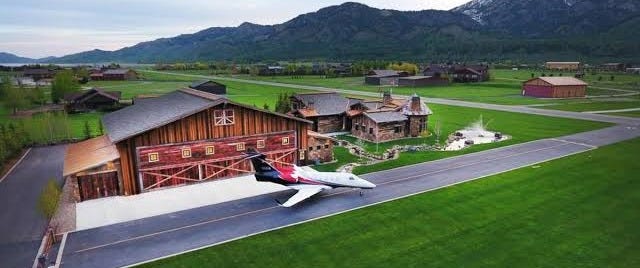
Spruce Creek in Florida is the largest: 1,300 homes, 5,000 residents, 700-plus hangars, and a 4,000-foot runway. Family homes run $400,000 to $2 million. At the high end, Alpine Airpark in Wyoming, 35 miles from Jackson Hole, sells lots for $479,000 to $2.25 million and finished homes for $3 to $5 million on a 5,850-foot runway. Pecan Plantation in Texas sold 174 lots in under three years, with transaction volume up 80% in 2025. Aviation homes sell at 20-30% premiums over comparable non-aviation properties.
MRO facilities: Aviation’s industrial play
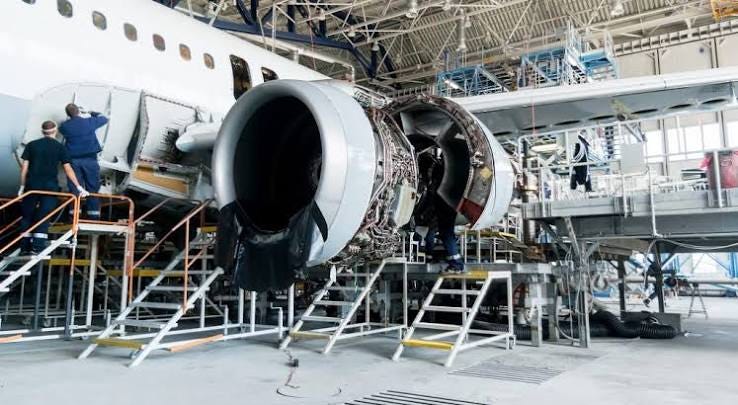
Maintenance, Repair, and Overhaul facilities are the large-format industrial side of the ecosystem. The global MRO market is roughly $100 billion and growing at 5% annually. In 2023 alone, $8.5 billion was invested in new MRO facilities globally, with 14 new facilities in North America adding over 7 million square feet. ST Engineering is spending $210 million on an expansion in Pensacola. Construction costs run $120 to $220 per square foot, higher than standard industrial due to cranes, foam suppression systems, and specialty power requirements.
Luxury terminals: The new amenity race within FBOs

The latest wave of FBO investment is pushing the product toward hospitality.
Clay Lacy Aviation is spending over $100 million on a 14-acre, 145,000-square-foot complex at John Wayne Airport in Orange County.
Atlantic Aviation’s new Boca Raton terminal is a $40 million, four-story facility with hotel-inspired lounges.
Flexjet is building six new FBOs including a $36 million Scottsdale facility. SFO is developing a luxury private terminal where entry costs $895 to $5,000 per visit, driven in part by AI-sector wealth.
—
Every corner of this ecosystem shares the same opportunity: the supply of airport land is fixed, the demand for private aviation is accelerating, and the infrastructure was built for a smaller era.
The operators and investors who control the tarmac over the next decade will set the terms for a very lucrative ecosystem.